China Best CNC Metal Cutting Suppliers for Global Buyers
Choosing a CNC metal-cutting supplier is not simply a search for the lowest unit price. Buyers need evidence that a shop can hold tolerances, repeat results, and communicate clearly when a drawing leaves room for interpretation. A clean sample part matters. So does the inspection report behind it. For global buyers, material certificates, realistic lead times, packaging details, and responsive technical support can shape the outcome as much as machine capacity.
Professor Yusuf Altintas is a recognized researcher in machining and manufacturing. A practical line for this guide, informed by his published work—not a verbatim quotation—is: “A dependable cut comes from a controlled process, not a promising quote.” That distinction is useful when comparing suppliers. Ask how they manage tool wear, verify critical dimensions, and handle a change in material or batch size. Look for specific answers, not broad assurances. Details matter.
This overview examines China-based CNC metal-cutting suppliers through capabilities, quality practices, communication, and delivery considerations. It is intended as a starting point for due diligence, not a substitute for reviewing drawings, samples, and documented requirements with each supplier. One honest caveat: no supplier is ideal for every part. A shop suited to simple brackets may not be the right fit for tight-tolerance components. That is worth checking early. With a clear specification and careful questions, buyers can compare options more reliably and reduce avoidable surprises.
Types of CNC Metal Cutting Suppliers in China
China Best CNC Metal Cutting Suppliers for Global Buyers
Types of CNC Metal Cutting Suppliers in China
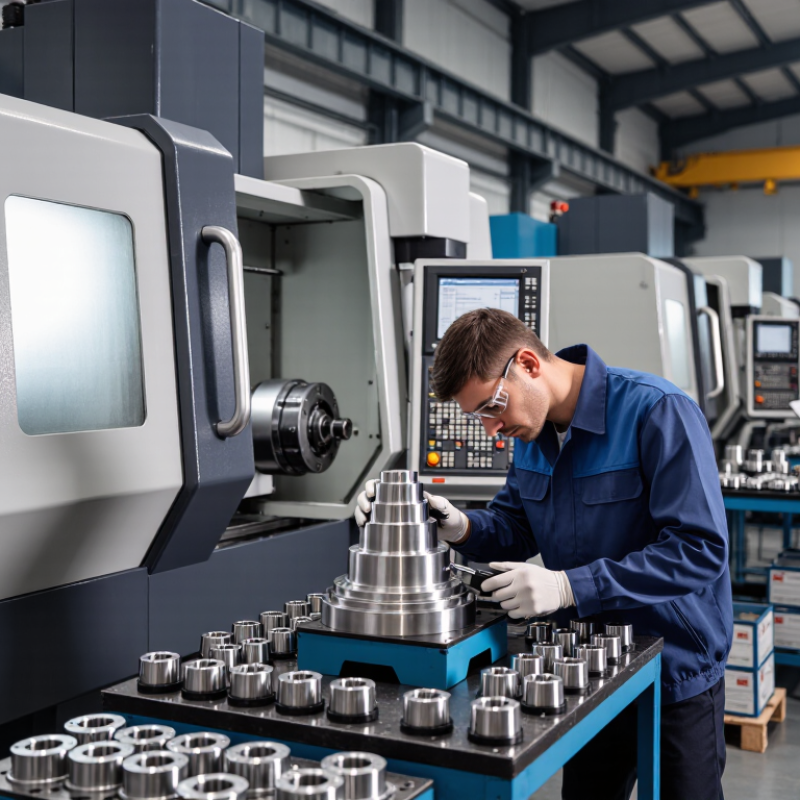
China’s CNC metal cutting suppliers generally fall into three groups. Integrated manufacturers combine cutting, milling, turning, and finishing under one roof. They suit buyers who need several operations and fewer handoffs. Ask whether inspection covers the finished part, not just the raw cut. That matters.
Specialist workshops focus on particular processes, such as laser cutting, waterjet cutting, or precision machining. They may handle a narrow range of materials or thicknesses with greater process familiarity. For a stainless-steel bracket, request a sample showing edge quality, hole position, and burr control. A low quoted tolerance means little unless the supplier can measure and document it.
Trading and engineering-service suppliers connect buyers with production workshops, help interpret drawings, and coordinate sampling or shipping. This can be useful when sourcing teams lack local technical support, but confirm who controls production and inspection. In practice, communication can feel smooth until a drawing revision arrives. Not always. Share material grades, tolerances, surface requirements, and annual quantities before comparing prices. Request a first-article report and clarify how changes are approved. These checks reveal more than a catalogue or a quick promise.
Core CNC Cutting Processes and Material Capabilities
CNC metal cutting covers several processes, and each suits a different job. Laser cutting handles thin sheet with narrow kerfs and clean profiles. Plasma cutting is often selected for thicker conductive plate, though heat can leave a wider affected edge. Waterjet cutting avoids heat distortion, which helps with heat-sensitive parts, but may take longer. CNC milling creates pockets, slots, and precise edges on solid stock. Details matter.
Material choice changes the result. Carbon steel cuts reliably across many common thicknesses; stainless steel may need different settings to limit discoloration. Aluminum conducts heat quickly, while copper can reflect laser energy, so machine capability and process setup matter. Ask suppliers about their tested thickness ranges, edge quality, and inspection methods—not just maximum capacity. A quoted tolerance depends on the alloy, thickness, fixturing, and measurement approach. Not always obvious. In practice, a sharp internal corner may need a small radius because the cutting tool has a real diameter. That detail can require a drawing revision, and it is easy to miss before production.
China Best CNC Metal Cutting Suppliers for Global Buyers - Core CNC Cutting Processes and Material Capabilities
| CNC Process | How It Cuts | Commonly Suitable Materials | Typical Material Range | Typical Dimensional Capability | Common Applications | Key Selection Consideration |
|---|---|---|---|---|---|---|
| Fiber Laser Cutting | A focused laser beam melts or vaporizes material, while assist gas clears the cut path. | Carbon steel, stainless steel, aluminum, copper, brass, and some other sheet metals | Commonly used for sheet and plate from about 0.5 mm to 25 mm; practical limits depend on material, power, and edge-quality requirements. | Often around ±0.1–0.3 mm for suitable sheet-metal parts; geometry, thickness, and setup affect results. | Flat panels, brackets, enclosures, signs, and precision sheet-metal blanks | Efficient for intricate profiles and production runs. Reflective metals and thicker sections may require specific equipment and process settings. |
| CNC Plasma Cutting | An electrically conductive, high-temperature plasma arc melts metal, and a gas stream removes molten material. | Mild steel, stainless steel, and aluminum | Commonly applied to plate roughly 3–50 mm thick, with machine-dependent capability beyond this range. | Often around ±0.5–1.5 mm for general plate cutting; edge squareness and tolerance vary with thickness and cut quality. | Structural components, base plates, frames, and heavy fabrication blanks | Well suited to conductive metals and thicker plate where speed is important; the cut edge typically has a wider kerf than laser or EDM. |
| Abrasive Waterjet Cutting | High-pressure water mixed with abrasive particles erodes material along the programmed path. | Steel, stainless steel, aluminum, copper alloys, titanium, and many non-metal materials | Commonly used from thin sheet to plate over 100 mm thick, depending on machine capacity and material. | Often around ±0.1–0.3 mm under suitable conditions; accuracy can vary with thickness, taper compensation, and cutting speed. | Thick plate profiles, heat-sensitive parts, prototypes, and mixed-material cutting jobs | Produces a narrow, low-heat-affected cut. Cutting time and abrasive use can be significant, especially on thick material. |
| CNC Milling | Rotating cutting tools remove material from a fixed or indexed workpiece. | Aluminum, carbon steel, stainless steel, tool steel, copper alloys, and titanium | Workpiece size is governed by machine travel and fixturing rather than a single standard thickness limit. | General machining is often around ±0.05 mm; tighter tolerances may be possible with suitable machines, tooling, and inspection. | Machined plates, pockets, slots, housings, tooling, and complex 3D features | Suitable for features that require controlled depths, flat surfaces, holes, or 3D contours; material and geometry influence cycle time. |
| CNC Turning | The workpiece rotates while a stationary cutting tool removes material from its outer or inner surfaces. | Aluminum, carbon steel, stainless steel, brass, copper alloys, and titanium | Best suited to round stock and rotational components; size is limited by spindle capacity and machine envelope. | General turning is often around ±0.05 mm; tighter results depend on material, feature geometry, and process control. | Shafts, bushings, pins, threaded parts, and cylindrical housings | Efficient for rotational geometry. Cross-holes, flats, and other non-rotational features may require additional operations. |
| Wire EDM | A controlled electrical discharge between a thin wire electrode and conductive workpiece removes material. | Tool steel, hardened steel, stainless steel, carbide, titanium, and other electrically conductive metals | Workpiece thickness depends on the machine’s vertical capacity; wire EDM is not limited to soft or annealed metals. | Often around ±0.005–0.02 mm for suitable features and process conditions. | Precision profiles, punches, dies, narrow slots, and hardened components | Can cut intricate shapes in hard conductive materials without conventional cutting forces; it is generally slower than thermal sheet cutting. |
Note: Material ranges and tolerances are indicative industry ranges, not guaranteed specifications. Actual capability depends on machine configuration, part geometry, material grade, thickness, cutting parameters, inspection method, and the supplier’s quality controls. Confirm drawing requirements and acceptance criteria before production.
How to Evaluate Supplier Quality and Certifications
Evaluating a CNC metal-cutting supplier takes more than checking a certificate online. Ask for current copies, the issuing body, scope, and expiry date. The scope matters. A certificate may cover one facility, not every workshop handling your order. Compare its stated processes with your needs, such as laser cutting, milling, deburring, inspection, and packing. Request a sample inspection report linked to a real part number. Check for measured dimensions, instrument IDs, and calibration dates. Small details count.
Quality is visible on the shop floor, too. During a visit or video audit, see how operators identify material lots and separate accepted parts from rework. Ask how defects are recorded and corrected. “We inspect everything” is not evidence. Request the inspection plan, tolerances, and records from a recent batch. For critical dimensions, compare supplier readings with an independent measurement or first-article sample. A clean report cannot prove every future shipment. Be candid about gaps. I would not reject a capable supplier over one imperfect record. Still, expect dated corrective action and follow-up evidence. That distinction is easy to miss.
Pricing, Lead Times, and Export Support
China Best CNC Metal Cutting Suppliers for Global Buyers
CNC metal-cutting quotes depend on more than the hourly machine rate. Material grade, thickness, tolerances, setup time, and finishing can all change the price.
Ask for a line-by-line quote covering tooling, inspection, packing, and freight. A low unit price can look attractive, but unclear packaging or inspection charges may raise the landed cost.
Lead times also need definition: confirm whether the quoted weeks include material sourcing, production, inspection, and dispatch. A drawing revision can reset the schedule. It happens.
Export support matters when parts must arrive ready for use. The UNCTAD Review of Maritime Transport 2024 reports that over 80% of international trade in goods by volume is carried by sea.
That makes packaging, shipping terms, and document preparation practical cost and timing factors. Request export packing details, commercial invoice and packing-list support, and a named contact for shipment updates. For urgent orders, compare air and sea freight against the part’s value and required arrival date, not just the factory’s dispatch date.
Tips: Send one controlled drawing revision and a clear tolerance list. Ask for a sample inspection report before bulk production. Get the production start date and estimated dispatch date in writing; they are not the same milestone.
Steps for Selecting and Working with a Supplier
China Best CNC Metal Cutting Suppliers for Global Buyers
Steps for Selecting and Working with a Supplier
Start with the part, not the sales pitch. Send a clear drawing, material grade, annual volume, critical tolerances, and surface-finish requirements. Ask suppliers to identify machining processes, inspection points, and assumptions behind each quotation. Grand View Research valued the global CNC machine market at USD 101.22 billion in 2023 and projected 6.3% annual growth from 2024 to 2030. That scale signals a competitive market, but it does not guarantee consistent workmanship.
Request evidence that matches your component. For a turned steel shaft, review a first-article report showing diameter measurements, runout, and thread checks. Confirm which gauges are calibrated and how often measurements are recorded. Small details matter. Compare sample results with the drawing, then clarify who pays for changes if the sample misses tolerance. A polished sample is not proof of stable production; ask how the supplier controls tool wear across a full batch.
Before placing a larger order, agree on a pilot quantity, inspection criteria, packaging, and milestone dates in writing. Share a simple change-control process, too. One overlooked revision can make good parts unusable. The International Federation of Robotics reported 4.28 million industrial robots operating worldwide in 2023, reflecting automation’s expanding role in manufacturing. Still, automation cannot replace clear specifications or careful communication. Review the pilot’s dimensional data and packaging condition, then adjust the process where results fall short. A little uncertainty remains—especially around long-term consistency—so keep early orders measurable and manageable.
China Best CNC Metal Cutting Suppliers for Global Buyers: Material Density Comparison
Typical material density affects part weight and shipping estimates. Values are approximate and can vary by alloy and specification; density alone does not determine machining cost or supplier capability.
Related Posts
-
Ultimate Checklist for Choosing the Best CNC Cutting Machine for Your Business Needs
-
Ultimate Checklist for Choosing the Perfect Laser Cutting Machine for Your Business Needs
-
Revolutionizing Manufacturing with Cnc Laser Cutting Technology Benefits and Trends in 2023
-
Top 10 Laser Cutting Machines for Global Buyers in 2026?
-
China Top 10 Plasma Table Suppliers?
-
How to Choose the Best Plasma Torch for Your Needs?
English
Français