Top 10 Prehung Door Manufacturers in China

    A prehung door arrives with its door slab already fitted within a frame, often with hinges installed. That assembly can simplify installation, but only when dimensions, swing direction, and wall requirements match the project. For buyers comparing Prehung Doors, a polished catalogue is just one part of the decision.

    This guide introduces ten prehung door manufacturers in China and the factors worth checking before requesting a quotation. We look at product range, material options, frame construction, finish consistency, hardware choices, and stated production capabilities. Details matter. A sample can reveal uneven paint near an edge, a loose hinge, or a frame that does not sit square. Those small signs deserve questions, not assumptions.

    Manufacturers may differ in how they handle custom sizes, packaging, quality checks, and communication during production. Ask for current specifications, clear drawings, and recent product samples where possible. Confirm how measurements are defined, including the frame’s outside dimensions and the required rough opening. A factory profile alone cannot confirm performance on your site. Nor can one attractive sample represent every production batch.

    The companies featured here offer a starting point for research, not a universal ranking for every buyer. Project needs vary, and supplier information can change. Compare evidence directly, clarify unclear claims, and assess whether a manufacturer can support your timeline and technical requirements. There is no perfect shortlist. Careful verification makes the choice more dependable.
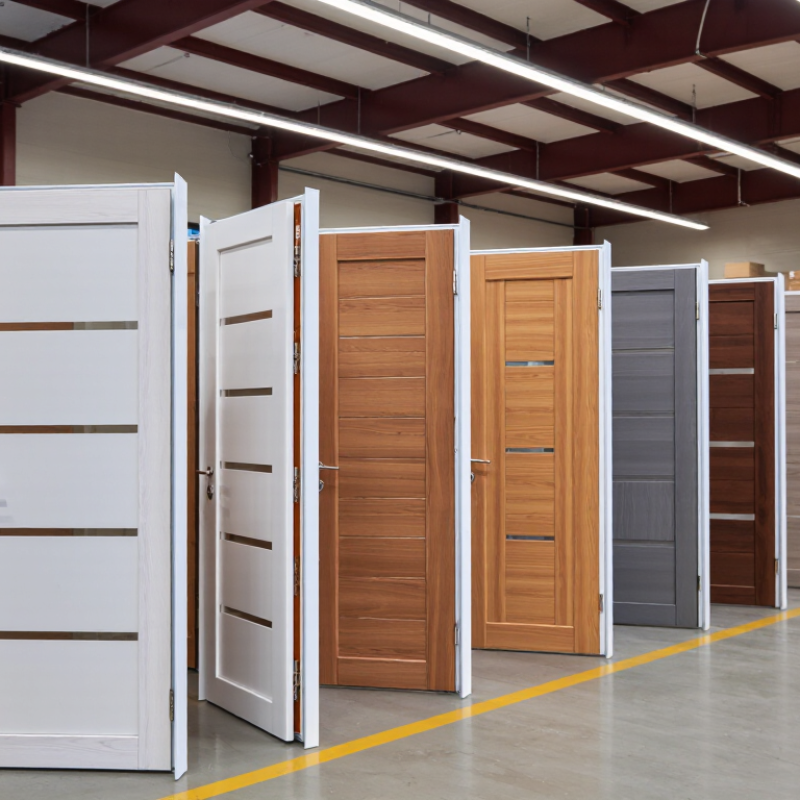
    Top 10 Prehung Door Manufacturers in China

    What Defines a Prehung Door and Its Main Components

    Top 10 Prehung Door Manufacturers in China

    What Defines a Prehung Door and Its Main Components

    A prehung door is a door slab already mounted in a frame, or jamb, before installation. The assembly typically includes the slab, jamb legs, head jamb, hinges, and a prepared opening for the latch and strike plate. Some units also include a sill, threshold, and weatherstripping. These parts work together: hinges carry the slab, while the jamb supports it and helps keep it aligned. A prehung unit can simplify fitting, but it still needs careful shimming and fastening.

    Fit matters. A frame may look square while small gaps remain near the latch or threshold. Those gaps can allow drafts and moisture, so visual inspection alone is not enough. The U.S. Energy Information Administration’s 2020 Residential Energy Consumption Survey reports that space heating accounts for about 42% of energy use in U.S. homes. This figure does not measure door losses, but it underscores why a sound building envelope matters.

    Tips: Check the jamb for twist, confirm even clearance around the slab, and inspect the seal along the bottom edge. Test the latch before final fastening. A practical detail: a door that swings freely on the floor can still bind after trim is installed. Small checks help. For specifications, compare opening dimensions, handing, sill type, and material against the project schedule before ordering.

    How China’s Prehung Door Manufacturing Industry Is Organized

    China’s prehung door industry is not built around one production model. It includes door-leaf factories, frame and hardware suppliers, finishing workshops, and assembly plants. In some regions, these operations sit close together, shortening the route from machined timber or engineered panels to a packed unit. A prehung set typically combines a leaf, frame, hinges, and prepared openings. Small differences matter. Hinge position, frame squareness, and clearance can affect installation on site.

    Larger manufacturers may coordinate design, machining, surface treatment, and final inspection under one roof. Others rely on specialist partners for veneers, locks, paint, or packaging. This flexible structure supports varied orders, including different dimensions, finishes, and opening directions. It can also make consistency harder. A sample may look even, while a later batch shows slight color shifts in daylight. Buyers should check drawings, material specifications, moisture control, and inspection records, not just showroom samples.

    Export-oriented suppliers often prepare units for container shipping with corner guards, protective film, and labeled cartons. Project orders may need closer coordination with builders because wall thickness and floor levels vary. Production capacity alone says little about fit or communication. Ask how changes are approved, how defects are recorded, and whether replacement parts can be matched months later.

    Criteria for Evaluating Prehung Door Manufacturers in China

    A reliable prehung door manufacturer should show control over the complete assembly, not just the door slab. Check how the frame, hinges, and latch align in a finished sample. Small gaps, rubbing edges, or loose hinge screws can signal inconsistent production. Ask what wood, engineered material, or metal is used, and how moisture is managed during storage and finishing. Clear specifications matter.

    Evaluate quality checks with measurable details. Ask for dimensional tolerances, finish options, hardware specifications, and inspection records for recent production batches. Confirm that the manufacturer can accommodate your opening sizes and explain how custom orders affect lead times. Request packaging details, too; a well-made frame can still arrive with crushed corners. Catalogs are useful, but they do not prove every production run is consistent. That deserves a closer look.

    Tips: Review a sample with a tape measure and square. Open and close the door several times, checking for smooth movement and even reveals. Ask how defects are handled. A vague answer is a useful warning, though it is not proof of poor quality.

    Top 10 Prehung Door Manufacturers in China: Evaluation Criteria

    Suggested evaluation weights for comparing manufacturers—not company scores or a market survey.

    How to use this chart: Compare suppliers using evidence such as product specifications, relevant test reports and certifications, customization capabilities, production capacity, delivery terms, quotations, export references, and after-sales policies. The percentages are suggested decision weights and should be adjusted to fit project requirements.

    Profiles of 10 Notable Prehung Door Manufacturers in China

    The ten profiles below highlight different strengths found among Chinese prehung door manufacturers. One focuses on interior doors for apartments, offering standard sizes and repeatable finishes. Another builds moisture-resistant units for bathrooms and utility rooms. A third emphasizes solid-wood frames and visible grain. A fourth supplies lightweight engineered doors for large housing projects. A fifth produces fire-rated assemblies, where buyers should verify test documentation for the exact configuration.

    A sixth manufacturer specializes in custom dimensions for renovation work. A seventh offers steel-frame options for commercial interiors. An eighth combines door slabs, frames, hinges, and lock preparation as complete sets. A ninth serves export orders and may provide packaging suited to long-distance shipping. A tenth focuses on acoustic door assemblies, where seals and installation quality matter as much as the panel. These are useful distinctions, not guarantees; actual capacity and consistency can vary between factories and product lines.

    Tips: Request a sample, a dimensional drawing, and written hardware specifications. Confirm whether test reports match the complete door set, not just one component. Ask how the factory checks frame squareness and finish consistency. Small details matter. I would also compare lead times against recent production references, since a polished catalogue alone cannot show how smoothly an order will run.

    How to Compare Manufacturers by Products, Quality, and Export Capabilities

    Top 10 Prehung Door Manufacturers in China: Comparing Products, Quality, and Export Capabilities

    Comparing prehung door manufacturers in China starts with matching their product range to your project. Check available sizes, frame materials, core options, finishes, and hardware configurations. Ask whether doors can be supplied as complete, assembled units or require installation work at the destination. Details matter. Request section drawings and a sample showing the frame, hinges, seals, and finish. Look closely at corner joints, screw placement, and whether the door swings smoothly without rubbing. These small checks can reveal inconsistencies that a polished catalog may not show. Ask for documented inspection procedures and recent quality records, rather than relying only on broad claims.

    Export capability is more than arranging ocean freight. Confirm packaging methods, lead times, product labeling, and the documents supplied with each shipment. For example, ask how the factory protects door corners and glass during container loading, and whether replacement parts can be packed separately. Request references from buyers in comparable markets, then verify that their product specifications resemble yours. A factory audit may help, but it cannot replace checking an actual sample. I would not assume the largest production capacity means the best fit; that is an easy mistake. Compare written quotations line by line, including hardware, packing, and agreed inspection points, before placing a trial order.