Top Machine Spindle Manufacturers and Suppliers?
Choosing the right Machine Spindle manufacturer can shape a factory’s accuracy, uptime, and long-term maintenance costs. The decision deserves more than a polished catalog or a low purchase price. A spindle running at 24,000 revolutions per minute faces heat, vibration, tool imbalance, and demanding duty cycles every day.
Dr. Scott Smith, a respected machining-dynamics researcher, has described the spindle as “the heart of the machine tool.” That comparison is practical. A healthy spindle produces a clean surface, stable cutting, and predictable tool life. A poorly matched unit may create chatter marks, excessive noise, or unplanned downtime within months.
This guide examines leading Machine Spindle manufacturers and suppliers across different applications. It considers high-speed machining, heavy-duty milling, grinding, turning, and automated production. Important comparison points include power range, maximum speed, bearing design, cooling method, taper standard, encoder options, repair support, and spare-part availability. Local service matters.
Very much.
A supplier may offer impressive specifications but weak technical support. Another may cost more while providing faster diagnostics and documented balancing services. That difference becomes visible beside a production line at 2 a.m.
The market is not perfectly simple. Published accuracy figures may use different testing conditions, making direct comparisons difficult. Buyers should request test methods, thermal-growth data, warranty terms, and references from similar machines. This article aims to support that process with practical judgment, not exaggerated promises. The best choice depends on material, tooling, duty cycle, machine structure, and the manufacturer’s ability to support the spindle after installation.
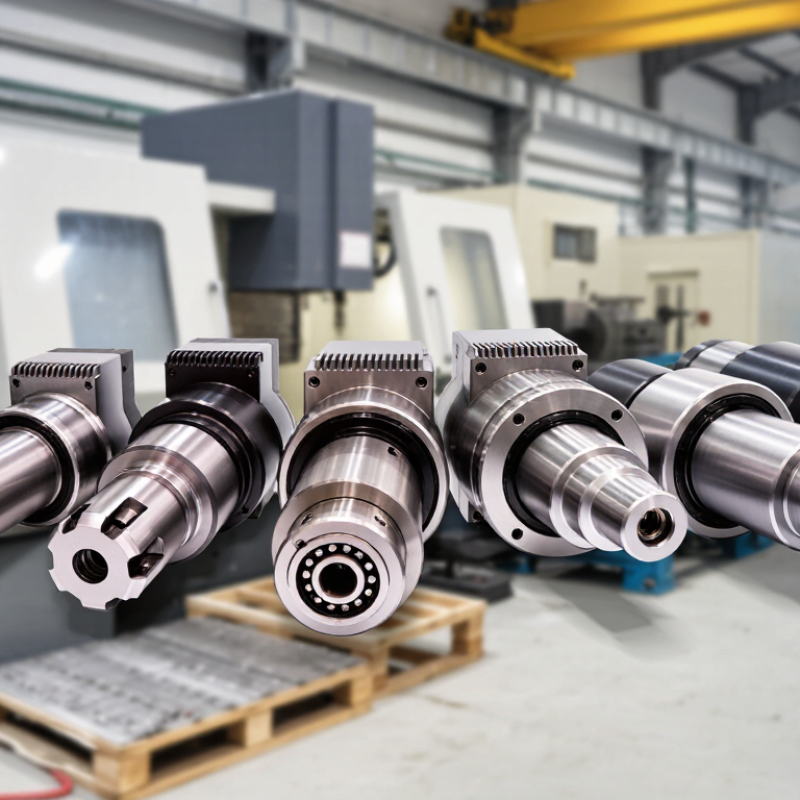
What Is a Machine Spindle and Why Does It Matter?
A machine spindle is the rotating unit that holds and drives a cutting tool. It transfers motor power through bearings, a shaft, and a tool interface. During milling, the spindle controls speed, torque, stiffness, and runout. These factors shape surface finish, dimensional accuracy, tool life, and cycle time.
It is the rotating heart. Speed alone misleads. A 24,000-rpm spindle may suit aluminum, but a lower-speed, high-torque unit can perform better in steel. Shop-floor checks should include vibration, bearing temperature, drawbar force, and runout at the tool nose. A small runout error can create visible marks on a precision bore. Thermal growth also changes accuracy after extended operation. ISO 230-3 addresses thermal effects in machine tools, while ISO 230-2 supports positioning-accuracy evaluation.
Demand for reliable spindle systems is growing with CNC adoption. Fortune Business Insights valued the global CNC machine market at about 83.99 billion dollars in 2023. Its 2024 report projects the market to reach approximately 128.86 billion dollars by 2032. This growth increases pressure on suppliers to provide documented test results, service plans, and compatible control systems. Buyers should compare duty cycles, cooling methods, torque curves, and replacement lead times. The cheapest spindle can become expensive when downtime, balancing, and repeat repairs are included. Specifications still need skepticism. A catalog rating may reflect ideal conditions, not continuous cutting.
Key Types of Machine Spindles and Their Industrial Uses
Machine spindles are the rotating heart of many production systems. Their type determines cutting speed, torque, accuracy, and maintenance needs. High-speed electric spindles suit aluminum milling, engraving, and compact machining centers. They deliver rapid rotation with low vibration, but heat control remains critical. Gear-driven spindles provide stronger torque at lower speeds. They often support heavy steel cutting, large boring operations, and demanding turning work. Belt-driven spindles are simpler and easier to service. However, belt tension can affect surface finish and positional accuracy. Right choice matters.
In CNC milling, a direct-drive spindle can maintain stable speed during continuous tool paths. Turning centers often use high-torque cartridge spindles for chucking heavy workpieces. Grinding spindles require exceptional radial stiffness and carefully controlled bearings. Drilling machines may use compact spindles designed for repeated axial loads. Robotic machining cells benefit from lightweight electric spindles with quick tool changes. I have seen small alignment errors create visible marks on finished parts. Temperature rises can also change tool position by several microns. Suppliers should provide speed curves, runout data, bearing details, and service procedures. Ask for test records. A credible supplier explains limits, not only peak performance. Catalogue figures can look impressive, yet real production loads may tell a different story. Careful trials remain necessary.
| Spindle Type | Drive Method | Typical Speed Range | Key Performance Characteristics | Common Machine Tools | Industrial Uses | Typical Workpiece Materials |
|---|---|---|---|---|---|---|
| Belt-Driven Spindle | External motor connected through a belt and pulley system | Approximately 3,000–15,000 rpm | Cost-effective, relatively easy to maintain, and capable of producing useful torque at moderate speeds. Belt tension and wear can affect accuracy and vibration. | Conventional machining centers, engine lathes, milling machines, and general-purpose CNC machines | General milling, turning, drilling, tapping, and repair-shop machining | Steel, cast iron, aluminum, brass, plastics, and composite materials |
| Direct-Drive Spindle | Motor rotor is integrated directly with the spindle shaft | Approximately 8,000–30,000 rpm | Low power transmission loss, reduced mechanical backlash, lower maintenance requirements, and improved dynamic response compared with belt systems. | High-speed machining centers, CNC turning centers, and precision milling machines | High-speed milling, precision turning, mold and die machining, and production machining | Aluminum, steel, stainless steel, titanium, hardened steel, and engineering plastics |
| Built-In Motor Spindle | Motor components are built into the spindle housing or shaft assembly | Approximately 10,000–60,000 rpm | Compact construction, high rotational accuracy, rapid acceleration, and reduced vibration when properly balanced and cooled. | Machining centers, high-speed milling machines, PCB drilling machines, and precision grinders | Fine milling, micro-machining, graphite machining, electrode production, and precision drilling | Graphite, aluminum, copper, ceramics, composites, plastics, and hardened materials |
| High-Torque Spindle | Direct-drive or geared motor optimized for torque output | Approximately 2,000–12,000 rpm | High torque at low and medium speeds, strong resistance to cutting-load changes, and suitability for heavy material removal. | Heavy-duty machining centers, large lathes, boring mills, and five-axis machines | Roughing, deep pocketing, heavy turning, drilling, tapping, and difficult-to-cut alloy machining | Stainless steel, tool steel, cast iron, titanium alloys, nickel-based alloys, and other high-strength metals |
| High-Speed Spindle | Usually an integrated motor with precision bearings and advanced cooling | Approximately 20,000–100,000 rpm or higher for specialized applications | Designed for very high surface speed, low runout, fast acceleration, and efficient machining with small cutting tools. | High-speed CNC routers, precision machining centers, engraving machines, and dental or laboratory mills | Micro-machining, engraving, small-tool milling, circuit-board drilling, and finishing operations | Aluminum, brass, plastics, wood, composites, ceramics, and non-ferrous metals |
| Grinding Spindle | Direct-drive, belt-driven, or motorized spindle designed for abrasive wheels | Approximately 3,000–60,000 rpm, depending on wheel diameter and process | High radial stiffness, controlled runout, precise bearing systems, and compatibility with grinding-wheel balancing requirements. | Surface grinders, cylindrical grinders, internal grinders, tool grinders, and centerless grinders | Surface grinding, cylindrical grinding, internal grinding, tool sharpening, and precision finishing | Hardened steel, carbide, ceramics, glass, cast iron, and superalloys |
| Turning Spindle | Motor-driven spindle with a chuck, collet, or workholding interface | Approximately 500–8,000 rpm, depending on workpiece diameter and machine design | Provides rotational workpiece support, controlled speed, high radial load capacity, and compatibility with chucking or collet systems. | CNC lathes, turning centers, Swiss-type lathes, and multifunction turning machines | External turning, boring, threading, grooving, facing, drilling, and parting | Steel, aluminum, brass, stainless steel, titanium, plastics, and cast iron |
| Milling Spindle | Motorized tool-holding spindle using a collet, taper interface, or hydraulic tool holder | Approximately 4,000–24,000 rpm | Designed to provide axial tool support, radial stiffness, tool-change compatibility, and stable cutting performance. | Vertical machining centers, horizontal machining centers, bed mills, and five-axis machines | Face milling, slotting, contouring, drilling, tapping, pocketing, and three-dimensional machining | Aluminum, steel, stainless steel, cast iron, titanium, plastics, and composites |
| Air-Bearing Spindle | Compressed-air film supports the rotating shaft without conventional contact bearings | Approximately 20,000–150,000 rpm in specialized systems | Very low friction, minimal mechanical wear, excellent rotational smoothness, and extremely low runout. It requires clean, regulated air. | Precision grinders, optical manufacturing equipment, metrology systems, and micro-machining equipment | Ultra-precision grinding, optical finishing, semiconductor processing, and micro-drilling | Glass, ceramics, silicon, carbide, hardened steel, and precision optical materials |
| Hydrostatic Spindle | Pressurized oil or another fluid creates a load-bearing film between shaft and bearing surfaces | Approximately 1,000–20,000 rpm, depending on design and application | High stiffness, excellent damping, very low friction, and strong suitability for ultra-precision motion and finishing. | Ultra-precision lathes, precision grinders, coordinate machining systems, and specialty machine tools | Diamond turning, optical component production, precision boring, and high-accuracy grinding | Non-ferrous metals, optical glass, ceramics, silicon, and other precision-engineered materials |
How to Evaluate Machine Spindle Manufacturers and Suppliers
Evaluating machine spindle manufacturers and suppliers requires more than comparing catalog speed and price. Start with the machining task: material, tool diameter, cutting load, duty cycle, and required surface finish. A supplier should explain how its spindle handles those conditions, not simply quote a maximum RPM. Ask for runout measurements, balancing grades, bearing specifications, cooling methods, and documented test procedures. Ask for proof.
Pay close attention to application experience. A technically impressive spindle may still perform poorly on a production line if thermal growth, vibration, or tool-change timing is ignored. Request case details from similar machines, including operating hours, maintenance records, and failure patterns. Reliable suppliers usually provide clear drawings, tolerance data, installation guidance, and realistic service intervals. Vague answers deserve caution.
After-sales support can determine the real cost of ownership. Check response times, spare-part availability, repair capabilities, warranty boundaries, and diagnostic support. A factory visit or live video inspection may reveal testing equipment that polished brochures do not mention. Independent vibration and runout testing is also valuable before acceptance. No test is perfect. I would still record ambient temperature, preload conditions, lubricant type, and measurement tools, because small differences can change the result. A supplier willing to discuss limitations often appears more credible than one promising flawless performance. That detail matters.
Leading Machine Spindle Manufacturers by Product Strengths
Machine spindle manufacturers differ less by advertising than by engineering depth. High-speed specialists often focus on compact motorized spindles, ceramic bearings, and precise thermal control. Their products suit aluminum, mold, and small-tool applications where 30,000 rpm is common. Heavy-cutting suppliers usually prioritize torque, rigid shafts, and larger bearings. These spindles handle steel, titanium, and deep roughing with less vibration.
Grinding spindle producers build around exceptional runout control and stable wheel support. In demanding workshops, a few microns can affect surface finish. Turning-spindle manufacturers tend to emphasize chuck capacity, acceleration, and continuous-duty reliability. A spindle with strong low-speed torque may outperform a faster model during stubborn material removal. The specification sheet rarely tells the whole story.
Experienced buyers should inspect balancing grades, cooling methods, bearing preload, encoder feedback, and repair procedures. Ask for measured runout, not only a tolerance claim. Check contamination control, cable routing, and replacement-part availability. I have seen impressive test cuts fail after poor coolant control. That detail is easy to miss. Supplier strength also includes application testing, documented maintenance, and responsive technical support. No spindle is perfect. Selection should match the tool, material, duty cycle, and machine structure, rather than chase the highest speed.
Buying Considerations for Selecting the Right Spindle Supplier
Choosing a machine spindle supplier requires more than comparing catalog prices. The spindle must match your cutting materials, duty cycle, and machine structure. Check rated speed, continuous torque, peak torque, taper type, and allowable tool weight. Ask how runout is measured. A reading below one micrometer may use different test conditions than your workshop expects.
Ask for test reports, bearing specifications, balancing grades, and cooling requirements. Details matter. A water-cooled spindle may need clean flow, stable pressure, and regular filter maintenance. Air-cooled models can simplify installation, but heat may increase during long aluminum or steel cutting cycles. Review the supplier’s experience with similar machines, not only its production capacity. Request installation drawings, electrical parameters, replacement procedures, and documented inspection records. Ask for proof.
Service quality often decides whether a supplier is truly reliable. Confirm response times, technician availability, warranty limits, spare-parts storage, and repair routes. A low purchase price can become expensive after one failed bearing or damaged encoder. Check lead times carefully, especially for custom interfaces or special shaft dimensions. Traceable serial numbers and final inspection data improve accountability. I once treated delivery speed as the main priority; that choice created avoidable alignment work. The lesson is imperfect but practical: supplier communication should be tested before purchase. Send detailed operating conditions and compare the accuracy of each reply. Vague answers deserve further questions.
Machine Spindle Selection: Typical Speed Ranges by Application
Typical spindle speed requirements vary by machining application. When comparing spindle manufacturers and suppliers, evaluate whether the offered speed range, power, torque, cooling method, bearing design, tool interface, accuracy, and service support match the intended process.
English
Français 