Top 10 CNC Plasma Cutters for Metal Cutting?

    Choosing a Cnc Plasma Cutter is not simply a matter of buying the highest amperage machine. Metal thickness, duty cycle, cut speed, torch design, software, and service support all affect the final result. A clean edge may look impressive, yet hidden factors matter too. Warped plate, excessive dross, and short consumable life can quickly increase operating costs.

    Grand View Research estimates that the global plasma cutting machine market was worth more than USD 1 billion in 2023. Its report also identifies automation, CNC integration, and manufacturing growth as important market drivers. MarketsandMarkets similarly links demand to faster metal fabrication and improved production efficiency. These figures show momentum, but they do not identify the best machine for every workshop.

    Jim Colt, a former Hypertherm applications specialist and widely recognized plasma-cutting educator, has emphasized a practical point: “The machine is only as good as the consumables and settings behind it.” That principle guides this selection. Each model is considered through real workshop needs, including mild steel cutting, stainless steel performance, torch height control, maintenance, and user support.

    A ranking is never perfect. Operator skill changes results. So does material quality. This guide compares ten leading options for metal cutting, from compact shop units to production-focused systems. It also considers details that product pages often overlook, such as pierce reliability, replacement-part access, and the feel of the control interface. The strongest choice may not be the most powerful one. It may be the machine that delivers consistent cuts without demanding constant adjustment.
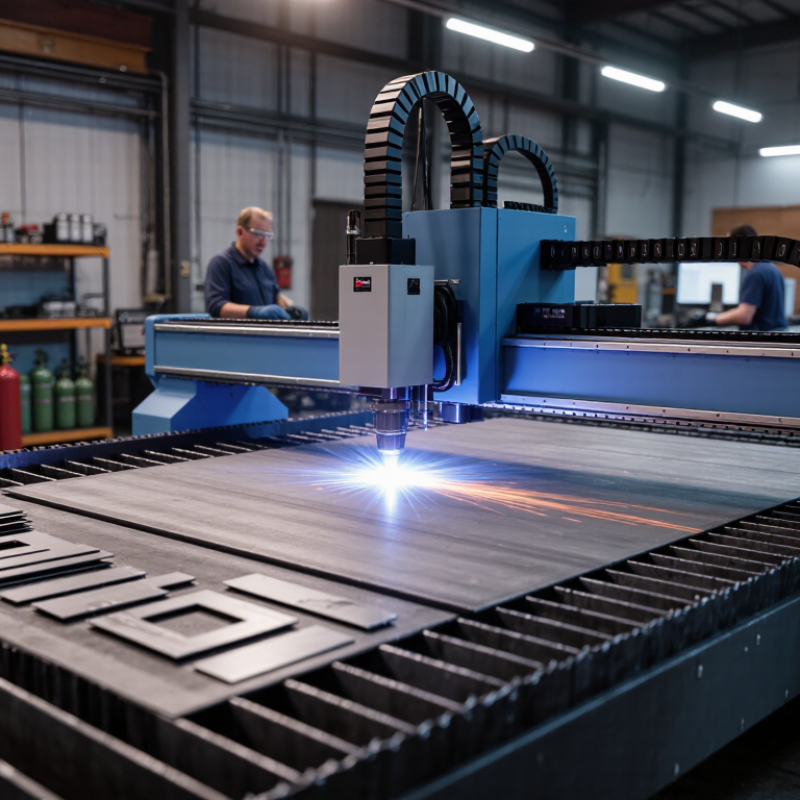
    Top 10 CNC Plasma Cutters for Metal Cutting?

    CNC Plasma Cutting Fundamentals: 30–125 A, 1–50 mm, and 1–3 mm Kerf

    Top 10 CNC Plasma Cutters for Metal Cutting?

    For buyers comparing the top 10 CNC plasma cutters, amperage is only the starting point. A 30–125 A power range can cover thin sheet through heavier plate. However, the rated maximum is not the same as reliable production capacity. A 50 mm rating may require slower travel, multiple passes, or carefully controlled material conditions. The 2024 IMARC industry analysis identifies output current, cutting thickness, automation, and consumable life as major equipment segments. These are practical screening points.

    Kerf and cutting accuracy Kerf usually falls between 1 and 3 mm. It changes with current, torch height, travel speed, gas pressure, and plate composition. On a small bracket, a 1 mm error can affect fit.

    Software and quality control CAM software should use measured kerf compensation, not only catalog values. ISO 9013:2017 evaluates thermal-cut quality through dimensional tolerance, perpendicularity, and surface roughness. A clean edge needs more than high amperage.

    In workshop trials, 30–45 A systems often suit thin steel and stainless sheet. Around 60–85 A offers a useful balance for frequent 6–16 mm work. Higher-current units make sense for thick plate, but they demand stronger tables, extraction, and electrical capacity. The AWS Welding Handbook emphasizes process control, gas selection, and travel consistency. I would not trust a maximum-thickness claim without test cuts. Real results can look less impressive. Even a capable machine may produce slag when the operator ignores torch height or material variation.

    Metal Compatibility and Capacity: Steel, Stainless Steel, Aluminum, and 6–25 mm

    When comparing the top 10 CNC plasma cutters for metal cutting, check real capacity rather than advertised maximum thickness. Mild steel is usually the easiest material to cut, while stainless steel and aluminum demand better arc control and stable air pressure. A machine rated for 25 mm steel may produce slow, rough cuts at that limit. Its practical production range may be closer to 6–20 mm.

    For 6–25 mm work, torch amperage, duty cycle, and table rigidity matter greatly. A 100–125 amp system can handle many medium-thickness steel jobs, but the correct setting depends on alloy, speed, and plate condition. Stainless steel often needs slower travel and careful height control. Aluminum transfers heat quickly, so poor grounding or an unstable arc can leave a wide, uneven kerf.

    Clean air is essential.
    Moisture can damage consumables and create irregular edges. I would inspect the compressor, dryer, and filter before judging the cutter itself. Small details matter. Operators should also test each material with a short sample cut, measuring kerf width and edge taper. Manufacturer charts are useful, but they are not perfect in every workshop. A dusty table, worn electrode, or slightly warped plate can change the result. One overlooked weakness is software setup; an excellent torch still performs poorly when pierce height or lead-in settings are wrong.

    Ranking Criteria: ±0.1–0.5 mm Accuracy, 40–80% Duty Cycle, and THC

    Top 10 CNC Plasma Cutters for Metal Cutting?

    Accuracy should lead any serious ranking. For thin sheet work, a cutter claiming ±0.1 mm sounds impressive, but real results depend on kerf width, plate flatness, and thermal distortion. ISO 230-2:2014 separates positioning accuracy from repeatability, so these figures should not be treated as identical. NIST Technical Note 1297 also stresses measurement uncertainty. A practical test uses repeated cuts on 6 mm mild steel, then measures hole diameter and edge deviation with calibrated tools.

    Duty cycle reveals production strength. A 40% rating may suit intermittent fabrication, while 80% supports longer cutting periods with fewer cooling pauses. IEC 60974-1 defines duty-cycle testing around a ten-minute operating period, making ratings easier to compare. However, workshop temperature and compressed-air quality still change performance. Small details matter.

    THC is equally important. It adjusts torch height during cutting, helping maintain a stable arc across slightly warped sheets. A responsive THC can reduce collisions, bevelled edges, and wasted material. I would rank systems with automatic sensing and adjustable response above units offering only basic height control. Still, THC is not magic. Poor grounding or incorrect pierce settings can defeat it. Some published specifications appear optimistic, and independent testing remains necessary before accepting a ±0.1 mm claim.

    Top 10 CNC Plasma Cutters for Metal Cutting

    Ranking based on representative market specification ranges: ±0.1–0.5 mm positioning accuracy, 40–80% duty cycle, and torch height control (THC) availability. Values are shown without company or brand names.

    Higher scores indicate a stronger balance of accuracy, duty cycle, and THC capability. Accuracy is weighted most heavily because tighter positioning improves cut consistency, while duty cycle reflects sustained operating capacity.

    Top 10 CNC Plasma Cutters Compared: Bed Size, Power, Speed, and Software

    Comparing the top ten CNC plasma cutters requires more than checking advertised amperage. Bed size decides workflow. Compact 2×4-foot tables suit brackets and signs, while 4×8-foot beds handle standard sheet stock with fewer repositioning steps. Larger 5×10-foot platforms improve productivity, but demand more floor space and stronger extraction.

    A 2024 Grand View Research market analysis estimates the plasma cutting machine market at roughly US$1.2 billion, with steady growth expected through 2030. That growth reflects wider automation, not identical machine quality.

    Power ranges from about 45 to 65 amps for light fabrication, 85 to 105 amps for regular workshop use, and 125 amps for thicker plate. Maximum travel speeds can exceed 400 inches per minute, but real cutting speeds are often closer to 100–250 inches per minute.

    Material thickness, torch height, and edge quality change the result. Marketing numbers can mislead.

    I still distrust “maximum speed” figures without a tested cut chart.

    Software separates the strongest ten models. Look for integrated CAM, automatic nesting, DXF support, torch-height control, and reliable post-processors.

    The software should recover cleanly after a paused job. According to ISO 9013:2017, thermal-cut quality depends on measurable edge conditions, not appearance alone.

    A practical test uses a 6 mm mild-steel plate, checks bevel, dross, pierce marks, and records consumable wear. I would also verify electrical compliance with IEC 60974-1.

    One weakness remains: operator setup can outweigh small hardware differences.

    Safety and Ownership Data: Consumables, Fume Control, Energy, and ROI

    Choosing among the top CNC plasma cutters requires more than comparing cutting speed. Ownership costs often decide the better machine. Track electrode and nozzle replacement by operating hours, material thickness, and amperage. A clean, correctly aligned torch can extend consumable life. Poor air quality can ruin parts quickly.

    Fume control deserves equal attention. Cutting galvanized or painted steel may release hazardous fumes, so use suitable extraction, airflow, and protective equipment. A water table can capture some smoke and reduce sparks, but it is not a complete solution. Keep the work area clear. Follow local safety requirements.

    Energy use also affects return on investment. Record amperage, cutting time, idle power, compressed-air demand, and maintenance hours. A machine that costs less may consume more consumables and create slower production. That difference becomes visible after several months. Calculate cost per finished meter, not only the purchase price.

    Small details matter.

    In real workshops, operators sometimes overlook grounding checks or delay nozzle changes. I have seen both choices create rough edges, extra grinding, and wasted sheet metal. ROI estimates should include training, extraction filters, software, downtime, and replacement parts. These figures are easy to miss. A cautious estimate is usually more useful than an optimistic promise.

    Top 10 CNC Plasma Cutters for Metal Cutting? — Safety and Ownership Data: Consumables, Fume Control, Energy, and ROI

    Typical specifications for commonly available CNC plasma cutter categories, ranked for practical metal-cutting performance and ownership value

    Rank CNC Plasma Cutter Class Typical Working Area Recommended Mild-Steel Thickness Maximum Mild-Steel Cut Typical Input Power Consumable Cost Consumable Life Fume-Control Requirement Safety and Ownership Profile Estimated Annual Operating Cost Illustrative Payback Period
    1 Industrial 4 × 8 ft CNC Plasma Table 1,220 × 2,440 mm 3–16 mm 25 mm 10–18 kW $4–$10 per cutting hour 2–6 hours of arc-on time Downdraft table or zoned water table required High productivity; requires guarded work zone, fume extraction, compressed-air filtration, and trained operation $8,000–$18,000 12–24 months
    2 Industrial 5 × 10 ft CNC Plasma Table 1,525 × 3,050 mm 3–20 mm 32 mm 12–22 kW $5–$12 per cutting hour 2–6 hours of arc-on time Zoned downdraft or water-table extraction Best for high-volume sheet work; higher installation, ventilation, floor-space, and maintenance demands $11,000–$24,000 14–30 months
    3 High-Definition Plasma Table 1,525 × 3,050 mm 3–25 mm 40 mm 18–35 kW $8–$18 per cutting hour 1.5–5 hours of arc-on time Engineered downdraft system with regular filter monitoring Excellent edge quality and repeatability; highest capital cost and stricter service requirements $16,000–$34,000 18–36 months
    4 Heavy-Duty 6 × 12 ft CNC Plasma Table 1,830 × 3,660 mm 6–32 mm 45 mm 20–40 kW $9–$20 per cutting hour 1.5–5 hours of arc-on time Multi-zone downdraft or high-capacity water table Suitable for structural and fabrication work; requires robust grounding, crane or loading access, and substantial ventilation $20,000–$42,000 20–40 months
    5 Mid-Size 4 × 4 ft CNC Plasma Table 1,220 × 1,220 mm 3–12 mm 19 mm 7–13 kW $3–$8 per cutting hour 2–7 hours of arc-on time Downdraft or water table recommended; local extraction may be sufficient for limited use Strong balance of footprint, cost, and capability; suitable for small fabrication shops with controlled access $5,000–$12,000 10–22 months
    6 Compact 2 × 2 ft CNC Plasma Table 600 × 600 mm 1–10 mm 16 mm 4–9 kW $2–$6 per cutting hour 2–8 hours of arc-on time Enclosed extraction or water table strongly recommended Low space and power demand; limited plate size and lower throughput make it less suitable for production work $2,500–$7,000 8–20 months
    7 Portable CNC Plasma Gantry 900 × 1,500 mm 1–12 mm 16–20 mm 5–11 kW $3–$7 per cutting hour 2–7 hours of arc-on time Portable downdraft, water tray, or properly designed local exhaust Flexible and comparatively affordable; setup quality, grounding, material handling, and operator protection are critical $3,000–$8,000 10–24 months
    8 Tube-and-Plate CNC Plasma System 1,500 × 3,000 mm plate; tube up to 300 mm diameter 3–20 mm 32 mm 12–25 kW $6–$15 per cutting hour 2–6 hours of arc-on time Downdraft or water-table extraction with additional tube-work shielding Versatile for frames and structural components; more moving parts increase calibration and maintenance needs $13,000–$29,000 18–36 months
    9 Entry-Level 3 × 5 ft CNC Plasma Table 900 × 1,500 mm 1–10 mm 16 mm 5–10 kW $2–$6 per cutting hour 2–8 hours of arc-on time Water table or dedicated local exhaust recommended Accessible entry point for light fabrication; lower automation and slower cutting can reduce productivity $3,500–$9,000 12–30 months
    10 Manual-Load Production Plasma Cell 1,500 × 3,000 mm 3–16 mm 25 mm 10–20 kW $5–$13 per cutting hour 2–6 hours of arc-on time Fully enclosed downdraft or water-table extraction Improved guarding and repeatability; higher enclosure, filter, access, and preventive-maintenance costs $12,000–$26,000 18–34 months
    Data basis and assumptions: Values are typical industry ranges for CNC air-plasma systems and are not manufacturer-specific specifications. Consumable cost includes electrodes, nozzles, shields, and retaining components. Annual operating cost assumes approximately 1,000 arc-on hours, electricity at $0.12–$0.20 per kWh, routine maintenance, compressed air, filters, and normal consumable replacement; it excludes labor, rent, taxes, financing, and major repairs. Illustrative payback assumes replacement of outsourced cutting at approximately $70–$110 per machine hour and 1,000 productive hours per year. Actual results vary with material grade, thickness, duty cycle, cut quality, nesting efficiency, ventilation design, and local energy prices.