China Top 10 Grain Silo Suppliers for Global Buyers?

    Choosing a grain silo supplier requires more than comparing prices or browsing polished factory photographs. Global buyers need evidence of storage performance, manufacturing consistency, installation support, and long-term service. This guide examines China’s leading grain silo suppliers through practical buyer criteria, including galvanized steel quality, silo capacity, aeration design, temperature monitoring, dust control, and spare-parts availability.

    Dr. Dirk Maier, a recognized grain-storage specialist, has emphasized: “Successful grain storage depends on controlling moisture, temperature, and airflow together.” That principle shapes this review. A strong supplier should explain how its systems reduce condensation, prevent hot spots, and protect grain during seasonal changes. Buyers should also examine project references, quality inspections, welding standards, export experience, and commissioning procedures. Certifications matter, but they do not replace factory verification.

    The keyword “grain sild” appears in some online searches, although “grain silo” is the correct industry term. Small detail. Clear terminology still matters when requesting quotations or technical drawings. This article compares ten Chinese suppliers with a careful, evidence-based approach. It considers product range, customization, production capacity, communication, delivery reliability, and after-sales response. Some rankings may change as companies improve or markets shift. That is worth admitting. No supplier is perfect, and a low-cost quotation may conceal installation risks or weak technical support. Readers should request current specifications, warranty terms, inspection records, and references before signing a purchase agreement. The goal is not to promote one manufacturer blindly. It is to help global buyers make a safer, more informed decision.
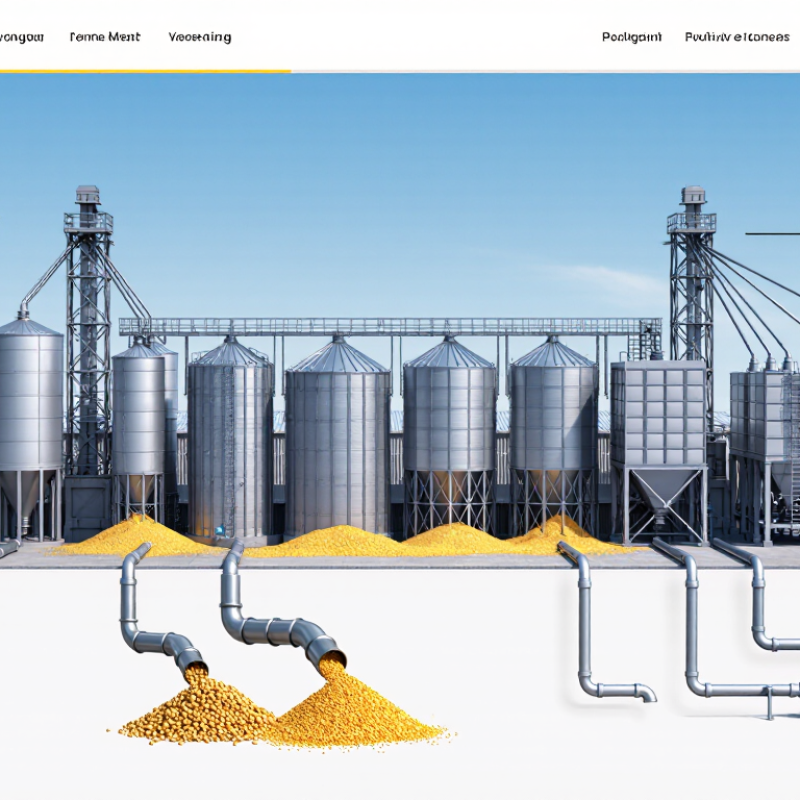
    China Top 10 Grain Silo Suppliers for Global Buyers?

    China’s Grain Silo Manufacturing Industry and Global Market Role

    China’s grain silo manufacturing industry has grown alongside the country’s enormous storage demand. The National Bureau of Statistics reported 706.5 million tonnes of grain production in 2024. This volume requires more than large warehouses. It needs reliable aeration, temperature monitoring, dust control, and efficient conveying systems. Scale matters.

    China’s manufacturers serve domestic projects and export markets across Asia, Africa, Eastern Europe, and Latin America. Their competitive strength comes from integrated metal fabrication, automation, and large-scale engineering capacity. The USDA’s Grain and Feed Annual reports continued investment in China’s grain logistics and storage infrastructure. Meanwhile, the International Grains Council estimated global grain production above 2.3 billion tonnes in 2024/25. These figures explain the growing demand for standardized silos and modular storage systems.

    A serious buyer should examine steel thickness, coating quality, foundation design, fan performance, sensor accuracy, and after-sales support. Price alone is a weak measure. In humid coastal regions, corrosion protection can matter more than initial savings. In hot inland areas, airflow design becomes critical. Storage capacity figures can also mislead. Nominal volume does not equal usable capacity. Independent testing and local installation records remain essential. China’s export role is expanding, but quality consistency still requires careful verification.

    (Sources: National Bureau of Statistics of China, 2024; USDA Foreign Agricultural Service, Grain and Feed Annual; International Grains Council, Grain Market Report, 2024/25.)

    Key Criteria for Evaluating Chinese Grain Silo Suppliers

    China Top 10 Grain Silo Suppliers for Global Buyers?

    Key Criteria for Evaluating Chinese Grain Silo Suppliers

    Evaluating Chinese grain silo suppliers requires more than comparing catalog prices. Confirm whether the engineering team has handled wheat, corn, rice, or oilseeds in similar climates. Ask for drawings, airflow calculations, loading rates, and foundation loads. Details matter. A capable supplier should explain steel grades, galvanizing thickness, insulation options, and corrosion protection. Avoid vague claims.

    Request documented factory inspections, welding procedures, dimensional checks, and trial assembly records. Check compliance with recognized safety and electrical standards in the destination country. Independent inspection before shipment can verify plate thickness, bolt quality, coating, and included components. Ask for references from operating sites, not only polished photographs. Contact at least two users. Their maintenance problems may reveal more than a sales presentation.

    Evaluate project management and after-sales support carefully. Who answers during installation? Are manuals, spare parts lists, and remote commissioning included? Clarify delivery terms, payment stages, warranty limits, and response times in writing. A low quotation may hide transport, erection, ventilation, or civil-work costs. Look beyond price. Test communication with a small technical question before signing. Slow or unclear replies are warning signs. No evaluation is perfect; even a reputable supplier can underestimate local humidity or harvest peaks. Leave room for independent engineering review and contingency planning.

    China Top 10 Grain Silo Suppliers for Global Buyers

    Key criteria for evaluating Chinese grain silo suppliers

    This buyer-evaluation framework uses a 100-point weighting model. Capacity and construction quality receive the highest weights, while export documentation and after-sales support help reduce international procurement and project-delivery risks.

    Profiles of China’s Top 10 Grain Silo Suppliers

    China Top 10 Grain Silo Suppliers for Global Buyers?

    Profiles of China’s Top 10 Grain Silo Suppliers

    Global grain demand continues to pressure storage infrastructure. The FAO Food Outlook, June 2024, estimated world cereal production near 2.85 billion tonnes. USDA Grain: World Markets and Trade, 2024/25, also highlights strong demand for maize, wheat, and rice. These figures make reliable silo selection more important.

    The following ten supplier profiles reflect common strengths found among China’s leading manufacturers. Supplier One focuses on galvanized steel silos for commercial farms. Supplier Two develops large flat-bottom silos for ports and milling plants. Supplier Three specializes in low-temperature grain storage. Supplier Four provides aeration systems for humid regions. Supplier Five builds compact silos for feed producers. Supplier Six integrates conveyors, cleaners, and dryers. Supplier Seven supports project-based engineering and installation. Supplier Eight offers automated monitoring for temperature and moisture. Supplier Nine serves smaller agricultural cooperatives. Supplier Ten emphasizes customized storage layouts and overseas commissioning. Public rankings remain imperfect. Suppliers change capacity, certifications, and delivery performance each year. Buyers should verify current factory records, not rely on attractive catalog claims.

    Tips: Request weld specifications, steel thickness, coating standards, and fan capacity. Ask for recent reference projects in climates similar to yours. Check whether sensors are calibrated and documented. A lower quotation may hide weaker insulation, limited spare parts, or expensive installation. Review the full lifecycle cost, including maintenance, energy use, and grain-loss control.

    China Top 10 Grain Silo Suppliers for Global Buyers? - Profiles of China’s Top 10 Grain Silo Suppliers

    Comparative supplier profiles based on commonly available Chinese grain-storage manufacturing capabilities and export-oriented project requirements.

    Profile Primary Product Focus Typical Silo Capacity Main Construction Materials Core Grain-Handling Systems Project Delivery Capability Common Export Regions Quality and Compliance Documentation
    01 Large-scale flat-bottom steel silos for commercial grain terminals 500–15,000 tonnes per silo Galvanized steel Carbon steel structures Bucket elevators, chain conveyors, belt conveyors, sweep augers, aeration floors and temperature monitoring Engineering, fabrication, installation guidance and commissioning support Central Asia, Southeast Asia, Africa and Latin America Material certificates, welding records, factory inspection files and ISO 9001-based quality procedures
    02 Farm and medium-sized storage systems for corn, wheat, rice and oilseeds 50–5,000 tonnes per silo Hot-dip galvanized sheets Bolted steel panels Portable augers, grain cleaners, fans, temperature cables and roof ventilation Standardized equipment packages with layout drawings and remote technical assistance Southeast Asia, South Asia, Eastern Europe and East Africa Dimensional inspection reports, coating information and electrical documentation where applicable
    03 Turnkey grain storage and post-harvest processing facilities 1,000–30,000 tonnes per project Galvanized steel silos Reinforced concrete foundations Receiving pits, pre-cleaners, dryers, elevators, conveyors, dust-control equipment and automated controls Site planning, process design, equipment integration, supervision and operator training Africa, the Middle East, Central Asia and government-supported agricultural projects Process flow diagrams, equipment manuals, commissioning checklists and performance test records
    04 Corrugated steel silos for agricultural cooperatives and grain merchants 100–10,000 tonnes per silo Corrugated galvanized steel Stainless steel contact parts Roof vents, aeration systems, grain temperature monitoring and discharge equipment Modular design, containerized shipment planning and installation manuals Latin America, Africa, Southeast Asia and the CIS region Galvanizing test data, bolt specifications, structural calculations and inspection documentation
    05 Rice and paddy storage systems with drying and cleaning integration 200–8,000 tonnes per silo Galvanized steel Food-contact stainless steel components Rice pre-cleaners, dryers, husk separation interfaces, aeration fans and moisture monitoring Process matching for paddy, brown rice, corn and other moisture-sensitive grains South Asia, Southeast Asia, Africa and selected Middle Eastern markets Food-contact material declarations for relevant components, electrical schematics and inspection records
    06 Temperature-controlled storage solutions for high-value grains and seeds 100–6,000 tonnes per silo Galvanized steel Insulated components where specified Advanced temperature sensing, aeration control, moisture measurement and alarm systems System configuration based on climate, grain type, storage period and required grain quality Middle East, Central Asia, Africa and warm-climate agricultural regions Sensor calibration records, control-panel documentation, wiring diagrams and user manuals
    07 Industrial silos for flour mills, feed mills and grain-processing plants 50–10,000 tonnes per silo Galvanized steel Painted or stainless steel process parts Pneumatic conveying interfaces, bucket elevators, screw conveyors, filters and level indicators Integration with milling, feed-production and bulk-loading systems Asia, Africa, the Middle East, Europe and Latin America Equipment datasheets, motor and electrical certificates, dust-control specifications and factory test files
    08 Small and medium modular grain storage packages for remote locations 30–2,000 tonnes per silo Bolted galvanized steel Lightweight support structures Mobile conveyors, compact cleaners, axial-flow fans, manual or motorized outlets Fast assembly, simplified foundations and reduced local infrastructure requirements Rural Africa, island markets, Southeast Asia and humanitarian agricultural programs Assembly drawings, packing lists, structural connection details and spare-parts schedules
    09 Grain terminal equipment and high-throughput bulk handling systems 2,000–50,000 tonnes per facility Heavy-gauge galvanized steel Structural carbon steel High-capacity elevators, belt conveyors, truck receiving systems, ship loading interfaces and dust suppression Capacity studies, equipment selection, layout coordination and phased project execution Ports and inland terminals in Asia, Africa, Latin America and the Middle East Load calculations, equipment performance data, inspection plans and applicable safety documentation
    10 Customized storage systems for government reserves and strategic grain stocks 1,000–20,000 tonnes per site Corrosion-resistant galvanized steel Reinforced concrete civil works Multiple silos, independent aeration zones, inventory monitoring, cleaning systems and backup power interfaces Site-specific design, tender documentation, installation supervision and maintenance planning Asia, Africa, Central Asia and public-sector food-security projects Technical proposals, quality plans, commissioning reports, maintenance manuals and spare-parts lists
    Capacity figures are typical project ranges rather than guaranteed limits. Final selection should be verified against grain type, moisture content, climatic conditions, throughput, foundation design, local regulations and required storage duration.

    Comparison of Silo Types, Capacities, Technologies, and Services

    China Top 10 Grain Silo Suppliers for Global Buyers?

    Comparison of Silo Types, Capacities, Technologies, and Services

    China’s leading grain silo suppliers serve farms, cooperatives, and commercial storage projects worldwide. Their portfolios usually include galvanized steel silos, hopper-bottom silos, and flat-bottom designs. Hopper-bottom models support faster unloading and easier cleaning. Flat-bottom silos often suit larger capacities and lower storage costs. Common capacities range from 50 to over 10,000 tonnes.

    Technology separates practical systems from attractive brochures. Buyers should examine aeration fans, temperature cables, level sensors, dust control, and automated unloading equipment. A reliable control panel should display grain temperature clearly, even in a noisy plant room. Engineers must also check local wind loads, seismic conditions, corrosion risks, and foundation drawings. Small omissions can become expensive later.

    Service quality deserves equal attention. Strong suppliers provide layout design, production drawings, factory inspection, installation guidance, commissioning, operator training, and spare-parts support. Remote assistance helps, but it cannot replace skilled site supervision during installation. Ask for material certificates, coating specifications, welding standards, and previous project references. Some suppliers respond quickly before payment, then become slower afterward. That risk needs honest consideration. A cheaper silo may still cost more when shipping delays, unclear manuals, or unsuitable aeration reduce grain quality. The best comparison weighs capacity, technology, documentation, delivery control, and after-sales responsibility together.

    How Global Buyers Can Select and Purchase Grain Silos from China

    Global buyers evaluating grain silos in China should begin with the crop, capacity, climate, and handling method. Wheat, maize, rice, and oilseeds behave differently during storage. Ask suppliers for drawings showing diameter, height, cone angle, aeration layout, and discharge equipment. Request material certificates for galvanized steel and food-contact components. A reliable supplier should explain tolerances, corrosion protection, insulation, and expected service life in plain language. Vague answers deserve a second review.

    Tips: Compare at least three quotations, but never compare price alone. Check weld quality, panel thickness, bolt specifications, fan capacity, temperature sensors, and dust-control design. Ask for references from farms or commercial elevators with similar weather conditions. A video tour helps, but an independent inspection is stronger. Confirm loading ports, packing methods, installation support, spare parts, warranty, and response times in writing. Also verify import, electrical, structural, and food-safety requirements in your country.

    Before ordering, calculate the full landed cost: silo, accessories, freight, insurance, customs, foundation, erection, and commissioning. Confirm whether the quotation includes testing under an actual grain load. Payment milestones should follow measurable production stages. A pilot unit may reduce risk for a new buyer, although it can increase initial costs. Some projects focus on steel volume and overlook ventilation. That mistake becomes expensive when moisture rises. Leave room for inspection, negotiation, and one uncomfortable question: what happens if the crop arrives wetter than planned?