7 Tips for Choosing the Right Natural Gas Boiler?
Choosing the right Natural Gas Boiler is not simply a matter of comparing prices. The decision affects winter comfort, fuel consumption, indoor air quality, and long-term maintenance costs. A boiler that looks powerful on a showroom floor may cycle inefficiently in a small, well-insulated home. That detail is easy to miss.
The International Energy Agency reports that energy-efficiency improvements could deliver more than 40% of the emissions reductions needed by 2030 under its Net Zero pathway. This gives boiler efficiency a practical role, even when natural gas remains part of a building’s heating system. Energy Saving Trust also explains that modern condensing boilers can achieve efficiencies above 90%, when correctly sized and installed. The U.S. Energy Information Administration recommends examining AFUE ratings, which measure annual heating efficiency rather than peak laboratory performance.
As energy economist Dr. Fatih Birol has stated, “Energy efficiency is the first fuel.” His point applies directly here: wasted heat is still wasted energy, regardless of the boiler’s brand. The seven tips ahead examine output sizing, AFUE, condensing technology, controls, fuel compatibility, installer experience, and service access. They also question a common assumption. The newest model is not automatically the best model.
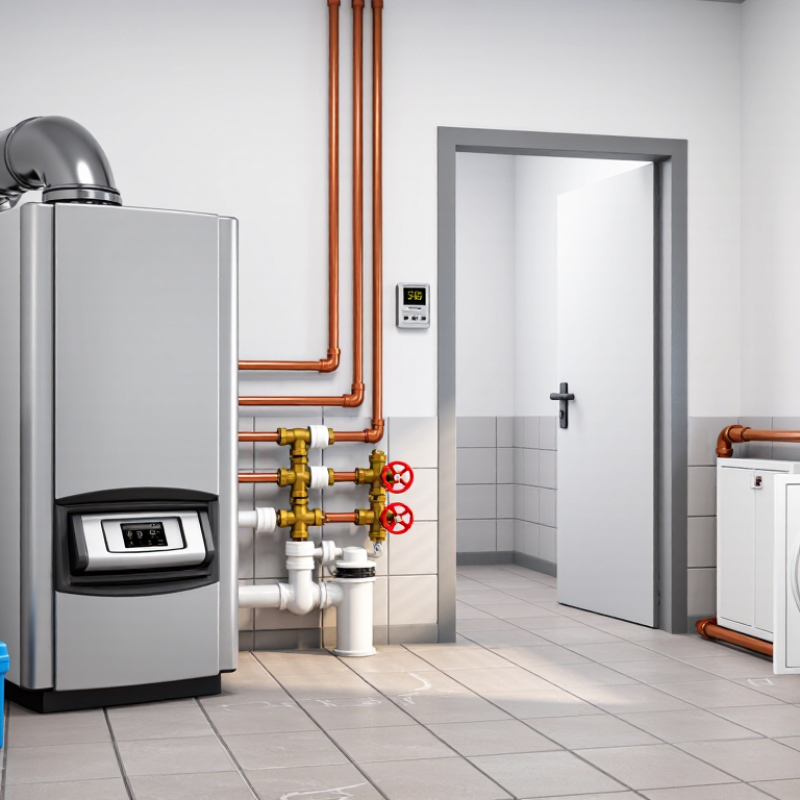
Real homes reveal more than brochures. Picture a boiler room with limited ventilation, narrow pipework, and a thermostat beside a cold hallway door. These details can change performance. Manufacturer claims matter, but independent reports and qualified installation matter more. No checklist is perfect. Careful comparison remains essential.
Understanding Natural Gas Boiler Types and Heating Requirements
Choosing a natural gas boiler starts with understanding your home, not the appliance label. Gas supplies 47% of U.S. household space heating, according to the U.S. Energy Information Administration’s Residential Energy Consumption Survey. A combi boiler suits smaller homes needing instant hot water. A system boiler works better with stored hot water and several bathrooms. Conventional boilers fit older heating layouts with tanks and cylinders.
Know your heat demand. A qualified installer should calculate room-by-room heat loss, considering insulation, windows, ceiling height, and local winter temperatures. Oversizing is common. It can cause short cycling, uneven warmth, and unnecessary fuel use. That mistake is easy to overlook. The U.S. Department of Energy recommends recognized load calculations instead of rough floor-area estimates. Check the boiler’s annual fuel utilization efficiency, or AFUE. Higher ratings generally mean less wasted gas, but installation quality still matters.
Choose a condensing model when the system can return cooler water. Condensing operation captures additional heat from exhaust gases. The International Energy Agency reports that buildings use about 30% of global final energy, so small efficiency gains matter. Ask about weather-compensating controls, low-temperature radiators, and flue placement before purchase. Confirm hot-water recovery during peak demand. Also check service access, condensate drainage, noise, and annual inspection requirements. A compact boiler may look ideal, yet poor pipe sizing can quietly reduce performance. Review the installer’s qualifications and written heat-loss calculation, not just the quoted efficiency figure.
Checking Boiler Efficiency, Output, and Household Compatibility
7 Tips for Choosing the Right Natural Gas Boiler
Tip 1: Check seasonal efficiency, not only the headline rating. The U.S. Department of Energy reports that modern high-efficiency boilers can achieve 90–98.5% AFUE. The European Commission sets an 86% minimum seasonal efficiency for many gas boilers below 70 kW. Compare like with like. Measure, do not guess.
Tip 2: Request a room-by-room heat-loss calculation. U.S. Department of Energy Building America guidance warns against sizing equipment from floor area alone. An oversized boiler may short-cycle, waste gas, and create uneven temperatures.
Tip 3: Match output to the home’s real demand. A 24 kW boiler might suit a small, well-insulated house, but several bathrooms may require greater hot-water capacity.
Tip 4: Check modulation range. Lower minimum output can reduce repeated starts during mild weather. Small is often wiser. Yet this is not automatic; poor controls can undermine good hardware.
Tip 5: Inspect household compatibility before buying. Confirm gas-pipe capacity, flue routing, condensate drainage, electrical supply, and available installation space. Older chimneys may need alteration.
Tip 6: Consider insulation and local climate. The IEA’s Buildings report states that buildings consume about 30% of global final energy, with heating a major contributor. Better insulation may reduce the boiler size required.
Tip 7: Ask for commissioning records, combustion checks, and annual servicing. A technically efficient boiler can perform badly when installed incorrectly. Reflect on the whole system, not the appliance alone.
Comparing Installation Needs, Ventilation, and Fuel Connections
7 Tips for Choosing the Right Natural Gas Boiler
Choosing a natural gas boiler starts with the installation space, not the product label. Measure wall strength, service clearance, doorway width, and drainage access. A heating professional should calculate the property’s heat loss before selecting output. Oversizing may cause short cycling, uneven warmth, and higher fuel use. Small details matter.
Check ventilation carefully. The room may need permanent air openings, depending on the boiler design and local requirements. Sealed combustion models use dedicated intake and exhaust pipes, while older systems may depend on indoor air. Inspect the flue route for length, bends, terminal clearance, and corrosion. Carbon monoxide protection should include a tested alarm near sleeping areas. Do not guess here.
Fuel connections deserve equal attention. Ask the installer to verify pipe diameter, pressure, shutoff access, and meter capacity. An existing gas line may look suitable but fail under full demand. Connections should be tested by a qualified professional under applicable codes. Condensing boilers also need a suitable condensate drain and freeze protection. I once underestimated service access during a renovation; the boiler worked, but maintenance became awkward. That mistake changed my checklist. Leave room for tools, future repairs, and honest inspection.
Evaluating Safety Features, Maintenance, and Service Support
Tip 1 Evaluate safety features before comparing efficiency ratings. Look for flame-failure protection, overheat controls, pressure relief, and sealed combustion. A carbon monoxide alarm should be installed nearby, but never replace professional testing. Ask a qualified installer to inspect the flue route, ventilation, and gas connections. Do not rely on a shiny casing. Safety lives inside.
Tip 2 Treat maintenance access as a buying factor. A technician should reach the heat exchanger, burner, condensate drain, and safety sensors without dismantling half the boiler. Request a clear service schedule and written inspection report. Small leaks matter. I would not assume one annual visit catches every fault; sensors and seals can fail between appointments. Check pressure readings occasionally, but leave internal adjustments to trained professionals.
Tip 3 Investigate service support before installation. Ask how quickly technicians respond, whether replacement parts are normally available, and who handles emergency callouts. Confirm warranty conditions in writing, including required maintenance and labor coverage. A reliable provider explains lockout codes without vague promises. Clear answers count. Request a sample service invoice if possible. It reveals whether charges, travel time, and parts are explained honestly.
Balancing Purchase Price, Operating Costs, and Warranty Coverage
Choosing the Right Natural Gas Boiler: Balancing Purchase Price, Operating Costs, and Warranty Coverage
A low purchase price can look attractive, but it rarely tells the whole story. Check the boiler’s seasonal efficiency, output range, and expected service needs. A properly sized unit usually runs more steadily and wastes less fuel. Ask a qualified heating technician to calculate heat loss, rather than relying on room size alone. That step is easy to skip.
Compare estimated annual gas use under realistic weather conditions. Review electricity consumption, controls, installation labor, and replacement parts. A slightly more expensive boiler may reduce monthly costs through better modulation and heat recovery. However, efficiency claims deserve careful checking. Request test standards and written calculations.
Warranty coverage needs equal attention. Confirm the coverage period for the heat exchanger, controls, labor, and corrosion damage. Ask who handles service and whether annual maintenance is required. Read exclusions carefully. Some warranties sound generous but provide limited practical protection. I once saw a homeowner choose a cheaper installation, only to face extra costs because commissioning records were missing. That decision was understandable, but not ideal.
Check these seven points: purchase price, efficiency, sizing, installation quality, maintenance access, warranty terms, and local service availability.
Keep every invoice and commissioning document. Plan for routine inspection before problems appear.
A useful warning: the cheapest boiler is not always the cheapest heating system.
English
Français 