10 Tips for Buying a Horizontal Shaft Concrete Mixer

    Buying a Horizontal Shaft Concrete Mixer is not simply a capacity decision. It is a production decision. The wrong machine may leave unmixed pockets, overload the drive, or waste valuable material. The right machine produces a consistent blend, even when the mix contains stiff aggregates, fibers, or low-slump concrete.

    Dr. Pierre-Claude Aïtcin, a respected concrete technology researcher, once emphasized, “Concrete quality begins with control of materials, mixing, and placement.” His observation applies directly to mixer selection. A powerful motor cannot repair poor proportioning or careless maintenance. Buyers should examine mixing capacity, shaft torque, paddle design, discharge speed, liner thickness, and access for cleaning. Small details matter. A narrow inspection door can turn a five-minute check into an exhausting task.

    This guide introduces ten practical tips for evaluating a Horizontal Shaft Concrete Mixer. It considers daily output, aggregate size, batch consistency, wear resistance, energy use, safety features, and supplier support. It also examines total ownership cost, not only the purchase price. A cheaper mixer may demand frequent paddle replacement or create costly downtime. That possibility deserves honest attention.

    Look inside the machine. Notice the clearance between paddles and trough. Listen for unusual vibration. Ask how quickly worn liners can be replaced. Some choices remain uncertain until the mixer faces real job-site conditions. That is why specifications should be compared with actual materials, climate, labor skills, and production targets. A careful buyer does not chase impressive numbers alone. They test whether the equipment can perform reliably on an ordinary, demanding workday.
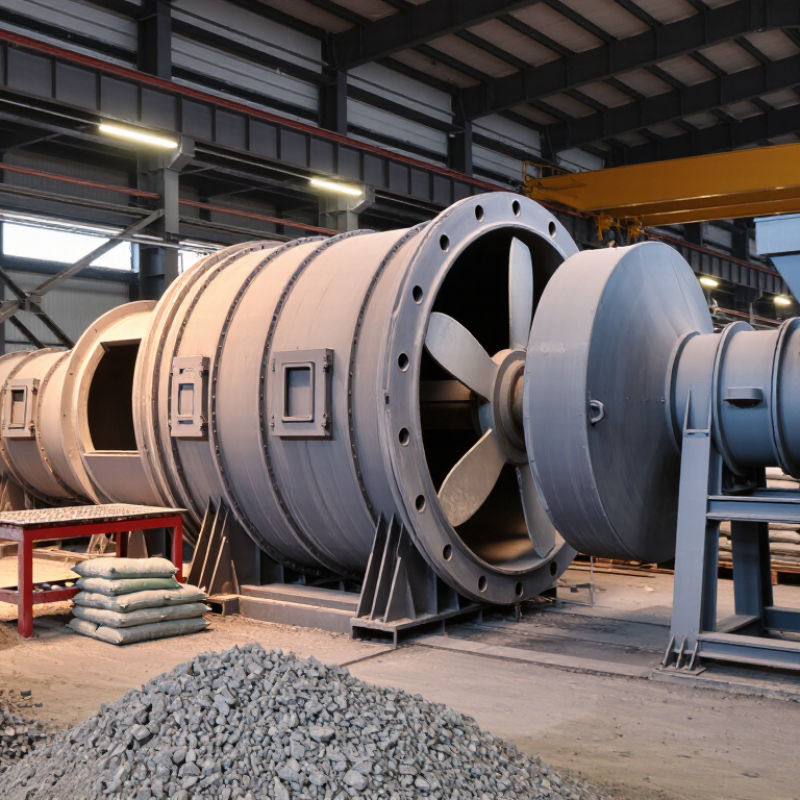
    10 Tips for Buying a Horizontal Shaft Concrete Mixer

    Define Your Mixing Requirements and Project Conditions

    Before buying a horizontal shaft concrete mixer, define exactly what you need to mix. Concrete, mortar, and stabilized soil behave differently inside the chamber. Record the aggregate size, moisture level, cement content, and required consistency. These details affect paddle shape, motor power, and mixing time. Calculate the usable batch volume, not just the advertised chamber capacity. Filling a mixer beyond its practical limit can produce uneven concrete and increase mechanical stress.

    Study the project conditions as carefully as the material. Measure the available floor space, access width, power supply, and ground stability. A mixer may fit the production target but fail at the job site. Dust, rain, freezing temperatures, and long operating hours also influence component protection and maintenance needs. Check how the mixer will be loaded, discharged, cleaned, and moved between batches. Small access problems become expensive delays.

    I have seen crews choose equipment from hourly output figures alone. That approach often overlooks waiting time between batches. Consider the full cycle, including loading, mixing, discharge, and cleanup. Ask for technical data that explains capacity, mixing duration, power demand, and wear-part replacement. Do not accept vague performance claims. A simple trial with your actual aggregate can reveal more than a brochure. Your estimate may still be imperfect, especially when moisture changes during the day. Leave practical capacity and schedule margin for those conditions.

    10 Tips for Buying a Horizontal Shaft Concrete Mixer

    Define Your Mixing Requirements and Project Conditions

    Batch size, aggregate size, moisture, and required production rate should be evaluated together before selecting a horizontal shaft concrete mixer. The chart below provides practical planning values for common concrete applications.

    Use the expected batch volume to size the mixer, then confirm that the machine can handle the aggregate size, moisture variation, loading method, and target production rate under your actual site conditions.

    Compare Mixer Designs, Capacity, and Mixing Performance

    Buying a horizontal shaft concrete mixer requires more than reading the drum capacity. A 2-cubic-yard mixer may not deliver 2 cubic yards of workable output. Manufacturers usually recommend a 60–80% working fill, depending on aggregate size and moisture. Twin-shaft designs often provide faster, more consistent circulation. Single-shaft paddle mixers can require less energy and may suit smaller batches. The best choice depends on discharge speed, material texture, and available space.

    Tip 1: Compare mixing performance, not only capacity. ASTM C94/C94M evaluates concrete uniformity through slump, air content, density, and strength samples. Its acceptance criteria include a maximum slump difference of 1 inch between samples and an air-content difference of 1.5 percentage points. These figures are useful during equipment trials. Ask suppliers for test records using your actual mix recipe.

    Tip 2: Check the mixing zone carefully. A horizontal mixer should keep cement paste from collecting beneath the shaft or along the end plates. Inspect paddle clearance, liner wear, access doors, and washout points. I have found that a slightly smaller mixer can perform better when it maintains proper fill depth. Capacity charts can mislead. Moisture changes, recycled aggregate, and short cycle times may reduce real output. Record batch time, discharge residue, and uniformity before purchasing. A practical trial often reveals more than a polished specification sheet.

    Evaluate Power Systems, Build Quality, and Safety Features

    10 Tips for Buying a Horizontal Shaft Concrete Mixer

    Evaluate the power system before comparing drum capacity. The U.S. Department of Energy’s Motor Systems Market Assessment reports that motor-driven equipment uses about 46% of American electricity. This makes motor efficiency and duty rating practical buying concerns. Check whether the mixer needs single-phase or three-phase power. Confirm voltage, starting current, and generator compatibility. A higher horsepower number can mislead. Torque at low speed matters more when the drum carries wet aggregate.

    Build quality appears in small details. Inspect shaft diameter, bearing protection, weld consistency, and the thickness of the mixing blades. Look for sealed bearings and replaceable wear parts around the discharge area. The frame should remain stable when the drum reverses or stops suddenly. Ask for cycle testing data, not only laboratory claims. I would also inspect a working mixer, because polished specifications can hide vibration and difficult cleaning.

    Safety deserves equal attention. The U.S. Bureau of Labor Statistics recorded 1,069 construction fatalities in 2023. Guarded drives, emergency stops, lockout points, and secure access covers reduce avoidable exposure. Confirm that controls remain reachable without leaning over the hopper. Check noise levels and dust-control provisions near the charging zone. ISO 12100 recommends hazard identification throughout machine design, not after installation. One detail is easy to miss: cleaning access. A cramped interior can encourage rushed maintenance. That risk deserves honest consideration.

    Check Maintenance Needs, Mobility, and Operator Convenience

    When buying a horizontal shaft concrete mixer, inspect maintenance access before studying output capacity. Open the service panels and check whether grease points are reachable without awkward tools. Look closely at the paddles, shaft seals, bearings, and discharge gate. These parts face heavy wear from sand and aggregate. Ask for clear service intervals and replacement procedures. A detailed maintenance manual matters more than attractive specifications. During a site test, listen for grinding, uneven vibration, or delayed discharge. Small noises can become expensive failures.

    Cleaning should also be practical. Hardened concrete around the shaft wastes labor and can damage moving parts. Check whether the mixing chamber has smooth corners, washout access, and safe inspection points. Guards must remain secure while allowing technicians to work efficiently. I have found that a spotless demonstration machine can hide difficult daily cleaning. Request a realistic cleaning demonstration, not only an empty-machine startup.

    Mobility affects both productivity and safety. Examine tire size, frame strength, towing points, brakes, and ground clearance. A mixer that moves easily across a yard may struggle on wet or uneven ground. Confirm its loaded weight and transport requirements. Operator convenience deserves equal attention. Controls should be visible, clearly labeled, and usable while wearing gloves. A low discharge height can reduce bending and spillage. Step platforms and handrails should feel solid. One detail is easy to miss: control placement may force the operator to stand near dust or splash zones. A short test with a full batch may reveal more than a brochure.

    10 Tips for Buying a Horizontal Shaft Concrete Mixer - Check Maintenance Needs, Mobility, and Operator Convenience

    No. Buying Dimension What to Check Practical Reference Data Why It Matters
    1 Batch Capacity Confirm whether the stated capacity is the usable mixing volume or only the total drum volume. Allow sufficient space for aggregate movement and avoid overloading the shaft. Typical range
    Small and medium horizontal mixers commonly handle approximately 0.25–2.0 m³ per batch. The usable output is normally lower than the geometric vessel volume.
    Matching batch size to daily demand reduces waiting time, material waste, and unnecessary wear on the drive system.
    2 Mixing Quality and Time Ask for trial-mix results using the intended concrete recipe. Check whether the paddles, blades, and shaft provide uniform distribution without excessive dead zones. Typical range
    A complete mixing cycle often takes about 2–5 minutes, depending on materials, moisture, admixtures, and batch size.
    Consistent mixing helps maintain concrete strength and workability while supporting predictable production rates.
    3 Motor and Drive System Compare motor power, gearbox rating, overload protection, starting method, and compatibility with the available electrical supply. For diesel units, check fuel consumption and cooling capacity. Selection guide
    Electric drive power may range from roughly 7.5–75 kW for many common mixer sizes. Final power requirements depend on capacity, aggregate size, moisture, and discharge frequency.
    Correct drive sizing prevents stalling, overheating, and premature gearbox or coupling failure.
    4 Maintenance Access Inspect access to bearings, gearbox, grease points, inspection covers, wear liners, paddles, and discharge gates. Components should be reachable without dismantling major assemblies. Good practice
    Daily cleaning and visual checks are normally required. Lubrication intervals commonly range from daily to monthly, subject to the service manual and operating conditions.
    Easy access shortens service time and makes it more likely that routine maintenance will actually be completed.
    5 Wear Parts and Liners Check whether paddles, blades, liners, scrapers, and seals are replaceable individually. Review their material, thickness, fastening method, and expected availability. Inspection point
    Abrasion-resistant steel or replaceable wear plates are commonly used in high-contact areas. Actual service life varies greatly with aggregate hardness, cleanliness, and operating hours.
    Replaceable wear components can reduce repair costs and extend the useful life of the mixer body.
    6 Mobility and Site Access Determine whether the mixer requires a trailer, forklift, crane, or fixed foundation. Measure transport width, overall height, ground clearance, turning space, and unloading access. Planning range
    Towed units may use road tires and a drawbar, while stationary units often require lifting points or a prepared base. Transport dimensions and legal towing limits must be verified locally.
    Suitable mobility reduces setup delays and prevents unexpected transport, lifting, or site-preparation costs.
    7 Loading and Discharge Arrangement Evaluate feed opening size, loading height, discharge-gate position, outlet clearance, gate control, and compatibility with hoppers, conveyors, pumps, or wheel loaders. Ergonomic target
    The loading and discharge layout should allow materials to move without manual repositioning. Hydraulic, pneumatic, or electric gates may be selected according to site utilities.
    A well-designed material flow reduces spillage, manual handling, blockages, and cycle time.
    8 Operator Controls and Visibility Check emergency-stop access, start/stop controls, overload indication, discharge controls, control-panel visibility, and whether the operator can observe loading and discharge safely. Safety feature
    Controls should be clearly labeled, protected from accidental activation, and positioned outside hazardous moving zones. Emergency stops should be accessible from normal operating positions.
    Clear controls improve productivity and help reduce operating errors and exposure to moving equipment.
    9 Cleaning and Washout Look for washout ports, drain points, removable covers, internal access, water connections, and surfaces that do not trap hardened concrete. Confirm the cleaning procedure before purchase. Routine requirement
    The mixer should be cleaned after each production shift or more frequently when concrete begins to build up. Never enter the mixer without complete lockout and isolation.
    Effective washout prevents buildup, protects mixing accuracy, and lowers the risk of difficult and hazardous manual cleaning.
    10 Safety, Documentation, and Support Request the operating manual, parts list, maintenance schedule, electrical diagrams, risk information, warranty terms, and training instructions. Verify guarding and lockout provisions. Before purchase
    Documentation should identify lubrication points, inspection intervals, torque requirements, wear limits, recommended spare parts, and safe procedures for clearing blockages.
    Complete documentation supports safer operation, faster troubleshooting, accurate budgeting, and better long-term equipment availability.
    Note: Capacity, power, mixing time, maintenance intervals, and component life are general industry reference ranges rather than guaranteed specifications. Confirm the final values against the selected mixer, concrete formulation, local electrical requirements, and site conditions.

    Assess Suppliers, Total Costs, Warranty, and After-Sales Support

    Buying a horizontal shaft concrete mixer requires more than comparing quoted prices. Ask each supplier for production records, material specifications, and references from similar job sites. Check weld quality, shaft alignment, paddle design, discharge speed, and cleaning access. Request a live demonstration with the mix you actually use. A dry test can hide problems. Confirm motor rating, drum capacity, batch cycle, and power requirements in writing. Ask whether critical parts are stocked locally and how quickly they ship. Review the supplier’s technical staff, installation process, and operator training. One question is simple: who answers when the mixer stops at 6 a.m.? Vague replies matter.

    Calculate total ownership cost over several years, not only the purchase invoice. Include freight, unloading equipment, installation, electrical work, spare paddles, liners, lubricant, labor, and expected downtime. Compare energy use per batch and cleaning time. A cheaper mixer may lose money through slow discharge or frequent wear. Ask for a written warranty covering the frame, gearbox, motor, and wear components separately. Check exclusions, response times, labor coverage, and whether poor cleaning voids protection. Request service records and a clear escalation path. Speak with two recent customers after a demanding season. Their comments reveal more than polished brochures. I would inspect one used machine, if possible. It may show wear patterns overlooked during a sales visit. Do not assume every promise is enforceable. Place the final specifications, delivery date, training, and support contacts in the contract. Leave room for doubt; some decisions look obvious until concrete production begins.