How to Choose the Right Car Engine Air Filter?
Choosing the right car engine air filter is more than matching a part number. It protects the engine from dust, pollen, sand, and tiny road particles that can damage sensitive components. The correct filter also supports steady airflow, efficient combustion, and consistent performance.
Automotive educator Jim Halderman has emphasized a practical maintenance principle: “Follow the manufacturer’s maintenance schedule, but inspect the filter under real driving conditions.” That advice matters because service intervals are not universal. A vehicle driven on dusty farm roads may need attention earlier than one used on clean city streets. Open the airbox carefully. Look for folded pleats, heavy gray dust, oil contamination, or damaged sealing edges. Small gaps can allow unfiltered air into the engine.
This guide explains how to compare filter materials, dimensions, airflow claims, and sealing quality. It also considers paper, foam, and reusable cotton designs. A premium-looking filter is not automatically the best choice. Some performance products require cleaning and precise re-oiling, which owners may overlook. That is a real weakness, not a minor detail.
Always verify the vehicle’s year, engine size, and airbox design before buying a car engine air filter. Check the owner’s manual and use a trusted catalog. An incorrect filter can fit loosely or restrict airflow. Neither outcome is acceptable. The final choice should balance protection, maintenance habits, driving conditions, and verified compatibility. Sometimes, the simplest filter wins.
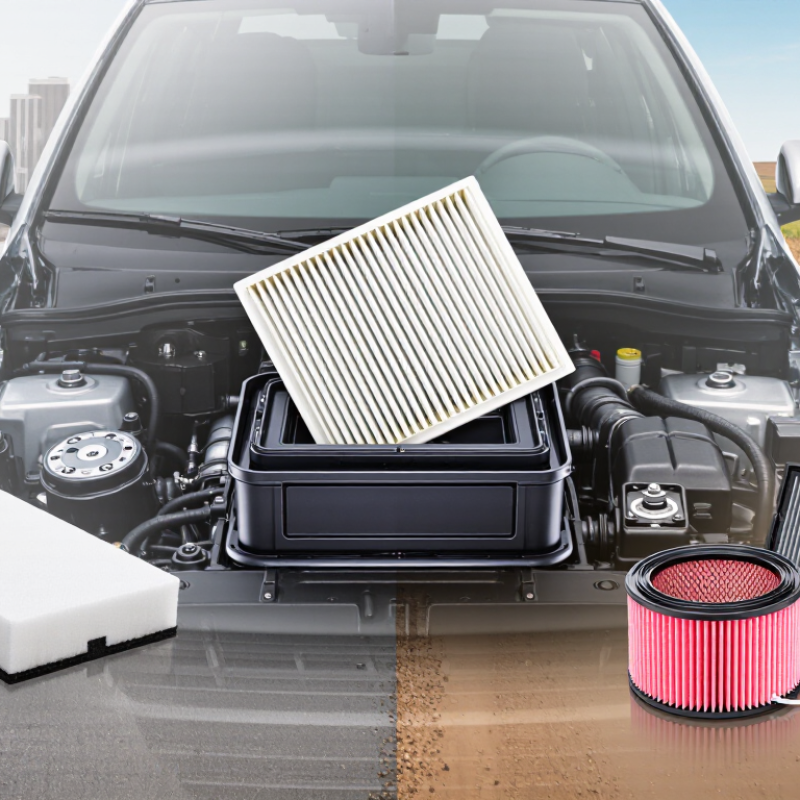
Understanding the Role of a Car Engine Air Filter
How to Choose the Right Car Engine Air Filter?
Understanding the Role of a Car Engine Air Filter
An engine air filter controls what enters the combustion chamber. It traps dust, sand, and fine debris before they reach sensitive engine parts. Clean air supports stable combustion and protects sensors, cylinder walls, and turbocharger components. The filter also controls intake resistance. Too much restriction can reduce airflow during acceleration.
The U.S. Department of Energy reports that replacing a clogged filter improved acceleration in older vehicles by 6–11%. However, modern fuel-injected engines may show little fuel-economy improvement. That finding matters. A new filter is not a guaranteed fuel-saving device. SAE technical guidance also evaluates filters through airflow, restriction, and particle-capture testing. These laboratory results are useful, but road dust is unpredictable.
Choose the correct size, sealing design, and filtration rating for your vehicle. A filter that fits loosely can allow dirty air around the media. Check the service schedule, especially after driving on gravel roads or through construction areas. Inspect the pleats under bright light. Heavy gray dust, damaged folds, or a distorted seal means replacement is sensible.
Tips: Do not judge a filter by color alone. Check airflow requirements. Reusable filters also need careful cleaning; over-oiling can contaminate intake sensors. I once trusted a “still usable” filter too long. It looked acceptable, but its dusty pleats told another story. Practical inspection is imperfect, yet valuable.
Identifying the Correct Filter for Your Vehicle
Identifying the correct engine air filter starts with accurate vehicle details. Check the model year, engine size, fuel type, and production date. Different engines can use different filter shapes. Even similar vehicles may require separate designs. Small differences matter.
Use the owner’s manual, vehicle identification number, or a reliable parts catalog to confirm compatibility. Do not depend on a product photo alone. Compare the old filter’s length, width, height, seal, and pleat pattern. The filter should sit evenly inside the housing, without bending or leaving visible gaps. I have learned this through routine inspections: a filter can look almost identical and still fit poorly. That mistake is easy to make.
Inspect the housing before installation. Remove dust, leaves, and loose debris with a clean, dry method. Never force a filter into place. If the cover does not close naturally, recheck the part number and filter orientation. A damaged seal can allow unfiltered air into the engine. That risk deserves attention. Keep the receipt until the fit is confirmed, especially when ordering online. Record the vehicle details and the installed filter’s measurements for future maintenance. My own notes are not always perfect, but they prevent repeated guesswork. Fresh air matters.
How to Choose the Right Car Engine Air Filter? - Identifying the Correct Filter for Your Vehicle
| Selection Dimension | What to Check | Correct Selection Guidance | Practical Example |
|---|---|---|---|
| Vehicle Identification | Vehicle year, manufacturer, model, engine size, fuel type, and body configuration. | Use all vehicle details when searching a catalog. The same model name may use different filters across production years or engine variants. | Example Two vehicles with the same model name may require different filters if one uses a 1.5-liter engine and the other uses a 2.0-liter engine. |
| Owner's Manual and Service Catalog | Original equipment part number, filter specification, and replacement instructions. | Treat the owner's manual and a reliable vehicle-part catalog as the primary references. Confirm that the catalog listing matches the exact engine application. | Best practice Compare the part number, vehicle application, and filter dimensions before purchasing. |
| Physical Dimensions | Length, width, height or thickness, sealing edge, pleat orientation, and locating tabs. | A correct filter should sit flat in the airbox, use the entire sealing surface, and allow the airbox cover to close without force. | Warning sign A filter that rocks, leaves gaps, or requires bending is not a correct fit, even if it looks similar. |
| Filter Shape | Panel, cylindrical, cone-shaped, or other vehicle-specific design. | Replace the filter with the same design unless the vehicle manufacturer specifies an approved conversion. Shape affects sealing and airflow through the airbox. | Common type Many passenger cars use a rectangular pleated panel filter, while some intake systems use a cylindrical filter. |
| Filter Media | Paper or synthetic dry media, washable media, and the presence of a complete perimeter seal. | Choose a media type approved for the vehicle. Dry filters are generally replaced when dirty; reusable filters must be cleaned and serviced according to their instructions. | Key requirement The media must be firmly attached to the frame, with no tears, loose edges, or open gaps. |
| Sealing Quality | Flexible gasket or sealing rim around the full perimeter. | The seal prevents unfiltered air from bypassing the filter. Check the airbox for dirt trails outside the dirty side of the filter, which can indicate leakage. | Inspection A continuous, even gasket contact is required around the complete airbox opening. |
| Airflow Direction | Airflow arrow printed on the filter, if provided, and the direction of air movement through the housing. | Install the filter according to the arrow or the vehicle service instructions. Incorrect orientation may reduce sealing or interfere with the airbox cover. | Installation Follow the marked airflow direction from the air intake side toward the engine side. |
| Driving Environment | Dust, construction areas, unpaved roads, heavy traffic, pollen, humidity, and frequent short trips. | Severe dust or high-pollen conditions can load a filter faster than normal use. Inspect it more frequently when driving in such environments. | Severe use Vehicles frequently driven on unpaved roads may need inspection well before the normal service interval. |
| Replacement Interval | Vehicle maintenance schedule, mileage, time, and actual filter condition. | Follow the vehicle maintenance schedule, but inspect earlier if the filter is visibly clogged, damaged, damp, or heavily contaminated. Intervals vary by vehicle and operating conditions. | Important Do not rely only on mileage; a clean-looking filter should still be checked for damage and correct sealing. |
| Visible Condition | Heavy dust, leaves, oil contamination, moisture, collapsed pleats, tears, or deformation. | Replace a filter that is damaged, oil-soaked, wet, deformed, or unable to seal. Do not reinstall a filter with torn media or a deteriorated gasket. | Replace immediately Visible holes, separated pleats, or a damaged sealing rim can allow abrasive particles into the engine intake. |
| Engine Performance Symptoms | Reduced acceleration, restricted airflow, unusual intake noise, poor fuel economy, or an illuminated warning lamp. | A clogged filter may restrict airflow, but these symptoms can also result from other faults. Inspect the filter first, then seek diagnostic testing if the issue remains. | Diagnostic caution Replacing the filter alone may not solve a problem caused by a sensor, intake leak, ignition fault, or fuel-system issue. |
| Airbox Compatibility | Correct cover fit, retaining clips, fasteners, intake snorkel, and sensor clearance. | The filter should not obstruct the airbox cover, mass-airflow sensor, breather connection, or intake duct. All fasteners should close normally after installation. | Final check After installation, confirm that the airbox is fully closed and that no part of the filter is pinched. |
| Quality and Certification Information | Clear packaging information, traceability, manufacturing details, and applicable test or quality standards. | Prefer a filter with clear application data and consistent construction. Avoid products with missing specifications, poor sealing materials, or unclear fitment information. | Purchase check Packaging should identify the applicable vehicle or part reference and provide installation or service information when required. |
Comparing Filter Types, Materials, and Performance
Choosing the right car engine air filter means comparing material, structure, and real-world performance. Pleated cellulose filters are affordable and widely used. Their dense paper fibers capture common road dust effectively. However, they may load quickly on unpaved roads.
Synthetic filter media usually offer more consistent fiber spacing and better moisture resistance. They can maintain airflow longer in humid or dusty conditions. Foam filters hold considerable dust, but their performance depends on thickness, oil treatment, and maintenance. Oiled cotton media can provide strong airflow, yet excess oil may affect sensitive airflow sensors. Not always.
In practical inspections, sealing quality matters as much as filter material. A filter with a soft, even gasket should sit firmly without gaps. I once found fine sand inside an airbox because the filter looked suitable but fitted poorly. The center appeared clean. The edges told another story. That detail changed how I judge filters.
Check the vehicle manual for the correct dimensions and replacement interval. In dry urban driving, a standard pleated filter may perform well. In dusty areas, choose a high-capacity synthetic or foam design. Inspect it against a bright light, but do not rely on light alone. A filter can look clean while holding fine particles. I still prefer measured fit, strong sealing, and stable airflow over impressive packaging claims. Cost is relevant, but engine protection deserves more attention.
Checking Fit, Quality, and Maintenance Requirements
How to Choose the Right Car Engine Air Filter?
A correct fit starts with the vehicle’s engine code, model year, and original filter dimensions. Do not rely on appearance alone. Two filters may look similar but use different seals or mounting clips. Compare the length, width, height, and sealing edge with the old filter. The filter should sit flat without bending or force. Even a small gap can allow dusty air into the engine. Check the owner’s manual when available, because online listings sometimes contain incomplete information.
Quality is visible in small details. Look for evenly spaced pleats, firm filter media, and a flexible, continuous seal. Uneven pleats may reduce airflow across the surface. A weak seal can become distorted during installation. The filter should feel secure, not loose or crushed. I have seen people judge quality by thickness alone, but that method is unreliable. More material does not always mean better filtration or airflow.
Maintenance requirements also affect the right choice. Standard driving may follow the vehicle maker’s replacement interval. Frequent travel on gravel roads, construction routes, or dusty streets requires earlier inspection. Hold the filter toward a light, but do not reject it only because it appears gray. Surface dust is normal. Heavy blockage, tears, oil, or damaged seals are stronger warning signs. Installation should include a clean housing and properly fastened clips. I sometimes overlook the housing corners during inspection, and those small areas can hold surprising amounts of dirt.
Installing and Replacing the Air Filter Safely
Installing and replacing an engine air filter safely begins with the correct part. Match the vehicle’s engine code, model year, and filter dimensions. A filter that looks similar may still seal poorly. The U.S. Department of Energy reports that a severely clogged filter improved acceleration by 6–11% in older carbureted vehicles. Modern fuel-injected vehicles showed little fuel-economy improvement. Condition matters more than marketing claims.
Keep the engine off. Let it cool first. Park on level ground and open the hood securely. I usually photograph the housing before opening it, because small clips and hoses are easy to forget. Release the clamps gently, then lift the cover without dropping dust into the intake. Do not use compressed air on the filter. It can damage the media and push particles deeper. Check the housing for leaves, sand, or moisture. A clean, dry housing supports reliable airflow.
Seat the new filter evenly around its rim. No gaps should remain. Refit the cover and fasten every clip by hand before tightening anything. The Society of Automotive Engineers evaluates filters through pressure-drop and dust-loading tests, so a clean appearance alone proves little. After installation, check for an uneven idle or a loose cover. I sometimes rush this final inspection, and that is exactly when a small sealing error survives. Record the date and mileage, while following the vehicle maker’s service interval.
English
Français 