 English
  Français
How to Choose the Best Metal Plasma Cutter?
Choosing the best Metal Plasma Cutter is not simply a matter of buying the highest amperage. Real performance depends on material thickness, cutting speed, duty cycle, air quality, and operator control. A machine that cuts 25 millimeters occasionally may struggle during continuous production. The right choice must fit the work, not just the brochure.
Industry data supports careful evaluation. Grand View Research’s Plasma Cutting Machine Market analysis reports continued demand from metal fabrication, construction, and automotive applications. MarketsandMarkets also identifies automation and CNC integration as major influences on plasma cutting equipment development. These trends matter because modern buyers increasingly expect cleaner cuts, repeatable results, and lower operating costs. Still, market growth does not prove that every advanced machine suits a small workshop.
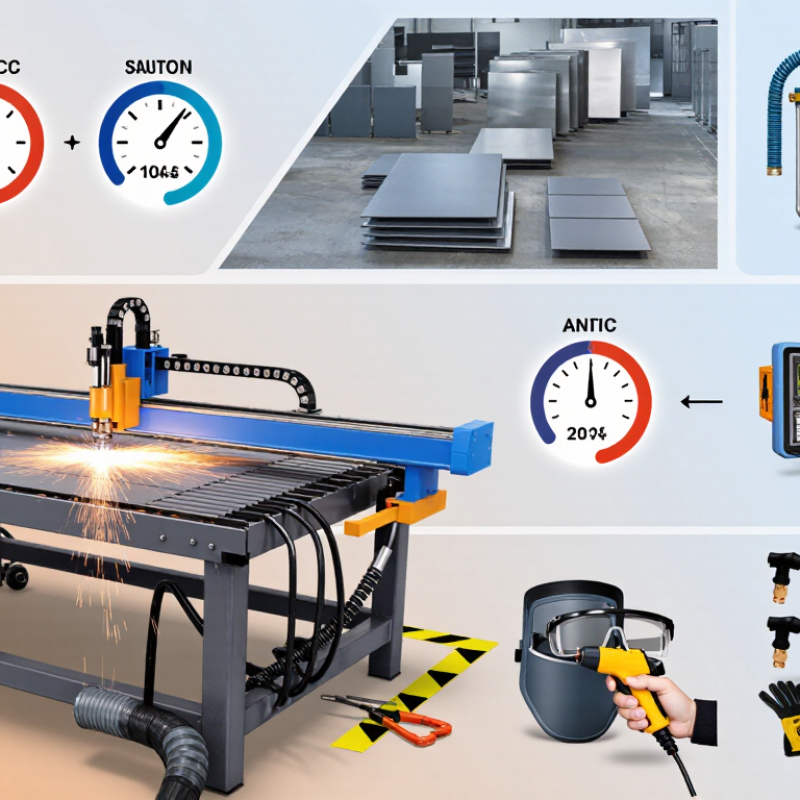
Start with your normal material range. Mild steel, stainless steel, and aluminum require different settings and cutting habits. Check the manufacturer’s recommended cutting thickness, not only its maximum severance rating. Compare duty cycle ratings at the voltage you will actually use. A 60-amp cutter may perform well on a thin steel panel, but poor air pressure can quickly damage its consumables. Clean, dry compressed air is essential. So is proper grounding.
Safety deserves equal attention. OSHA guidance emphasizes guarding, ventilation, electrical safety, and protection from sparks, fumes, and ultraviolet radiation. Buyers should also review applicable local requirements and the manufacturer’s instructions. One weakness in many buying guides is excessive focus on amperage. It sounds convincing. Yet consumable cost, warranty support, torch ergonomics, and service access often decide long-term value. The “best” Metal Plasma Cutter may be less powerful, but more reliable for your actual workload.
Understanding How Metal Plasma Cutters Work
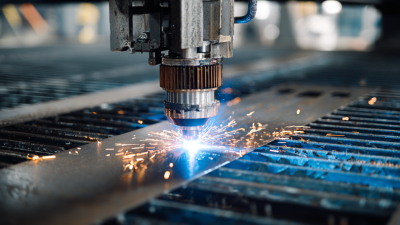
A metal plasma cutter uses electricity and compressed gas to create a focused cutting arc. The torch sends current through the gas. The gas becomes plasma when the arc strips electrons from its atoms. This extremely hot stream melts metal and pushes the molten material through the kerf. A work clamp completes the electrical circuit. Without a clean connection, the arc may sputter or stop. That small detail affects cut quality more than many buyers expect.
When choosing a cutter, match its rated capacity to your real material thickness, not its maximum claim. Frequent work on 8 mm steel needs useful cutting power above 8 mm. Piercing capacity is usually lower than clean-cut capacity. Check amperage control, duty cycle, air requirements, and replacement consumables. Air pressure matters. Moisture can damage the torch and distort the edge. A built-in filter helps, but it cannot replace regular draining and inspection.
In practical workshop use, travel speed changes the result quickly. Move too slowly, and the lower edge collects heavy dross. Move too quickly, and the arc may fail to penetrate fully. I rarely get perfect settings on the first pass. I test on scrap metal, then adjust current, air pressure, and speed. A narrow kerf is useful, but it is not the only measure. Noise, torch comfort, cable length, and service access also influence safe, repeatable work. No cutter is perfect. A convenient machine may still demand more maintenance later.
How to Choose the Best Metal Plasma Cutter? - Understanding How Metal Plasma Cutters Work
| Selection Dimension | What It Means | Typical Range or Requirement | How It Affects Cutting | Recommended Choice |
|---|---|---|---|---|
| Plasma-Cutting Principle | A plasma cutter sends compressed gas through a narrow nozzle and uses an electric arc to ionize the gas into high-temperature plasma. | Plasma temperatures can exceed approximately 20,000°C in the arc zone. | The plasma melts the metal, while the high-velocity gas stream blows the molten material away. | Choose a system with stable arc control, suitable gas flow, and compatible consumables. |
| Input Power | The electrical supply determines where the cutter can be used and how much output current is available. | Common options include 120 V, 230 V, or dual-voltage input. | Higher-voltage input generally supports greater cutting capacity and reduces the risk of overloading a household circuit. | Choose dual-voltage equipment for flexible use; select 230 V when regularly cutting thicker metal. |
| Output Current | Output amperage controls the amount of energy delivered to the plasma arc. | Small portable units: about 20–40 A; general fabrication units: about 40–60 A; heavy-duty units: 60 A or more. | Higher amperage usually increases cutting thickness, but it may also increase power consumption and operating cost. | Match the amperage to the thickest material you expect to cut rather than choosing the highest rating automatically. |
| Rated Cutting Thickness | The maximum thickness that can normally be cut at a practical speed with a clean edge. | Typical equipment ratings range from approximately 6 mm to 25 mm, depending on current and material. | Cut quality and speed decline as the material approaches the rated maximum. | Choose a cutter whose rated capacity is at least 25% greater than your usual material thickness. |
| Severance Thickness | The thickest material the machine can separate, usually at a slower speed and with a rougher edge. | Often greater than the rated cutting thickness, but it is not intended for routine precision work. | Using the severance rating continuously can produce more dross, a wider kerf, and reduced consumable life. | Use the rated cutting thickness for purchasing decisions and treat severance capacity as an emergency limit. |
| Duty Cycle | The percentage of a 10-minute period that the cutter can operate at a specified current before cooling is required. | Common ratings include 35%, 60%, and 100% at a stated amperage and ambient temperature. | A 60% duty cycle permits approximately 6 minutes of operation followed by about 4 minutes of cooling at the rated conditions. | Choose at least 60% for frequent workshop use and a higher rating for long, continuous cuts. |
| Cutting Speed | The rate at which the torch can move while maintaining an acceptable cut. | Thin sheet may be cut at several hundred millimeters per minute; thick plate requires a much slower speed. | Excessive speed can leave an incomplete cut, while very slow movement can create excess dross and a wider heat-affected zone. | Select a machine with adjustable current and published speed guidance for your target materials. |
| Material Compatibility | Plasma cutting is suitable for electrically conductive metals. | Common materials include mild steel, stainless steel, aluminum, copper, and brass. | Material type, thickness, surface condition, and thermal conductivity influence cutting speed and edge appearance. | For aluminum or copper, select sufficient power and reliable cooling because these metals conduct heat efficiently. |
| Compressed-Air Demand | The air supply provides the gas stream that forms and constricts the plasma arc and removes molten metal. | Many portable systems require approximately 100–200 L/min of clean, dry air at roughly 4.5–6.0 bar. | Insufficient pressure or contaminated air can cause unstable arcs, poor cuts, and premature nozzle or electrode wear. | Use a compressor that exceeds the cutter's airflow requirement and install filtration, regulation, and moisture separation. |
| Gas Selection | The type of plasma gas affects arc behavior, cut quality, and operating cost. | Compressed air is common for general work; nitrogen, oxygen, or argon-hydrogen mixtures may be used for specialized applications. | Different gases can alter edge appearance, oxidation, cutting speed, and consumable life. | Use clean compressed air for routine fabrication unless the material or process specifically requires another gas. |
| Pilot Arc Type | The pilot arc starts the plasma arc without requiring the torch tip to touch the workpiece. | Contact-start, high-frequency start, and blowback-start systems are commonly encountered. | A non-contact pilot arc is useful for painted, rusty, expanded, or perforated metal and can reduce tip contamination. | Choose a blowback or other non-contact starting system for irregular or surface-contaminated materials. |
| Torch and Cable Length | The torch assembly determines reach, handling comfort, and access to the workpiece. | Common torch leads are approximately 3–6 m, depending on the equipment configuration. | A longer lead improves reach but can add weight, storage difficulty, and potential voltage or airflow considerations. | Select the shortest length that comfortably reaches the work area and inspect the cable regularly. |
| Kerf Width | Kerf is the width of material removed by the plasma arc. | It varies with amperage, nozzle size, material thickness, torch height, and travel speed. | A wider or inconsistent kerf reduces dimensional accuracy and may require more finishing. | For templates or CNC work, prioritize precise current control, consistent air pressure, and accurate torch height. |
| Consumable Life | Electrodes, nozzles, swirl rings, and shields gradually wear during operation. | Life varies substantially with material, amperage, air quality, piercing technique, and cutting frequency. | Worn consumables can cause a wandering arc, angled cuts, enlarged holes, and excessive dross. | Choose equipment with accessible, reasonably priced consumables and replace damaged parts as a matched set when required. |
| Torch Height Control | The distance between the torch and workpiece affects arc stability and cut quality. | Manual cutting usually requires a consistent stand-off; mechanized systems may use automatic torch-height control. | Too much distance weakens the arc, while contact or insufficient distance can damage the nozzle and shield. | Use a drag shield or stand-off guide for manual work and automatic height control for CNC applications. |
| CNC Compatibility | CNC-ready cutters provide signals or interfaces for automated start, stop, and arc-voltage control. | Look for a machine torch, machine interface, torch-height-control support, and suitable duty cycle. | Compatibility improves repeatability, cutting accuracy, and production efficiency. | For automated cutting, verify interface specifications before purchase rather than relying only on the amperage rating. |
| Safety Features | Protection systems help reduce electrical, thermal, and operational risks. | Useful features include over-temperature protection, over-current protection, low-air indication, and thermal shutdown. | These systems can prevent damage caused by insufficient airflow, excessive duty cycle, or electrical overload. | Use a cutter with clear fault indicators and always wear a suitable welding helmet, gloves, protective clothing, and hearing protection. |
| Ventilation and Fume Control | Cutting metal produces fumes, gases, ultraviolet radiation, noise, and sparks. | Outdoor work or local exhaust ventilation is recommended; coated metals require additional caution. | Poor ventilation can expose the operator to hazardous fumes and reduce visibility around the cut. | Provide effective ventilation, remove flammable materials, and never cut unknown coatings or containers that may contain residues. |
| Portability | Weight, handle design, and enclosure size determine how easily the cutter can be transported. | Compact units may weigh under 10 kg, while higher-capacity workshop units are often heavier. | Portable equipment is convenient for field repairs but may have lower duty cycle or cutting capacity. | Choose compact equipment for maintenance and light fabrication; choose a heavier unit for sustained workshop production. |
| Best Overall Buying Rule | The best plasma cutter balances capacity, duty cycle, air supply, cut quality, safety, and operating cost. | Allow approximately 25% capacity headroom above the thickest material you normally cut. | Overspecifying every feature increases cost, while underspecifying capacity can cause slow cuts, poor quality, and excessive wear. | Select a model that comfortably meets your normal thickness, power availability, airflow, and work-environment requirements. |
Related Posts
-

Maximizing Value with Best Metal Plasma Cutter After Sales Support and Maintenance Cost Insights
-
Envisioning the Future of Compact CNC Plasma Cutting Technology for Global Buyers
-
What is a Plasma Tube Cutter and How Does it Work?
-
Understanding the Importance of the Best Metal Plasma Cutter Technology
-

Innovative Approaches for Best Small Plasma Table in 2025 Industry Technology Trends
-
Discovering Innovations: Exploring Alternative Technologies to the Best CNC Plasma Cutting Tables