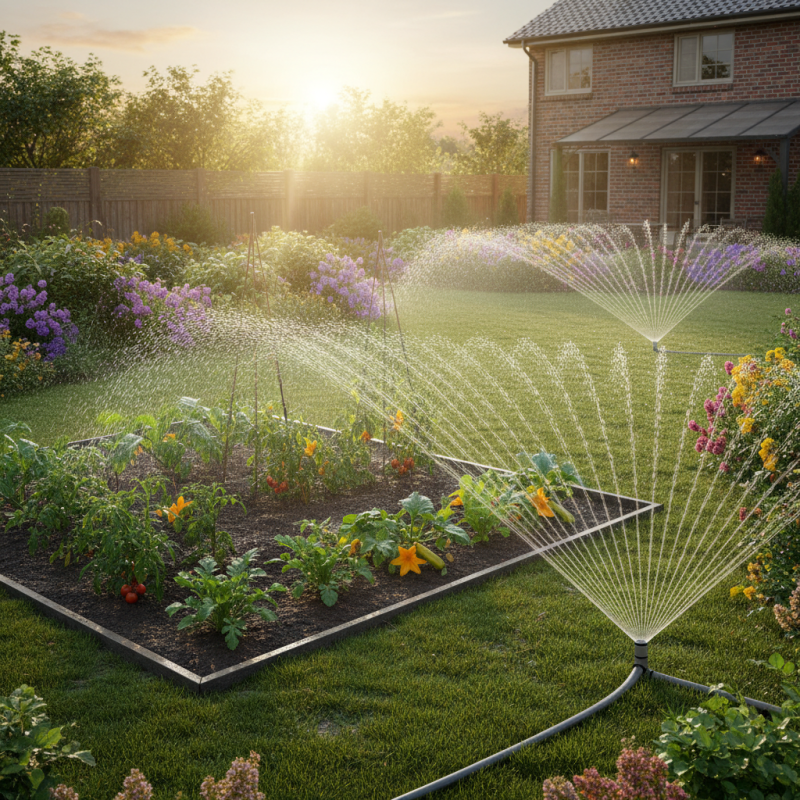
How to Choose the Best Garden Sprinkler for Your Needs?
Choosing the right Garden Sprinkler can be challenging. With numerous options available, understanding your specific needs is essential. A garden sprinkler is not just a watering tool; it plays a vital role in garden health.
Different gardens have different requirements. The size of your garden, its shape, and the type of plants you grow all matter. For example, a small vegetable garden may need a simple oscillating sprinkler. In contrast, a large lawn might require a more advanced, rotating sprinkler system.
Efficient watering promotes plant growth and conserves water. Understanding the features like coverage area, flow rate, and timing functions can help simplify your decision. Reflect on your garden's specific demands. A well-chosen garden sprinkler can save both time and resources, allowing you to enjoy the lush results of your efforts.
Understanding Your Garden's Watering Requirements
Understanding your garden's watering requirements is crucial for effective management. A study by the Irrigation Association shows that about 50% of residential water is used for landscaping. This highlights the importance of tailoring your watering strategy to your garden's unique needs. Factors such as plant types, soil quality, and climate play a significant role in determining how often and how much to water.
Different plants have varying water needs. For example, succulents require less water compared to vegetable gardens. According to the USDA Plant Hardiness Zone Map, regions can experience drastic differences in rainfall and temperature, affecting water consumption. Soil type also influences drainage and retention. Sandy soils drain quickly, while clay retains moisture. This variation requires regular monitoring and adjustments.
While it may be tempting to adopt a one-size-fits-all approach, this can lead to overwatering or underwatering. Excess water can lead to root rot, while insufficient watering stresses the plants. Using a moisture meter can aid in precise watering. However, its readings can be misleading if the soil varies in depth. Thus, understanding these nuances will help you make informed decisions, ensuring your garden thrives.
Types of Garden Sprinklers and Their Functions
When selecting the ideal garden sprinkler, understanding the different types is crucial. There are several popular designs, each serving specific watering needs. Oscillating sprinklers are effective for larger areas. They deliver a fan-shaped spray that covers wide spaces evenly. According to industry reports, they can water around 3,500 square feet with proper adjustment.
Impact sprinklers are another reliable option. They use a rotating arm to throw water over a distance. This type is perfect for irregularly shaped gardens. However, some users note that they require regular maintenance to function optimally. The efficiency of impact sprinklers typically ranges from 1,500 to 2,500 square feet, depending on the model and pressure applied.
Drip irrigation is gaining popularity as well. It provides water directly to the roots of plants, reducing evaporation. Studies show it can save up to 60% more water than traditional methods. Yet, setting up a drip system can be complex, and it might need frequent checks to prevent clogs. Each sprinkler type has its pros and cons, making it vital to choose one that fits your garden’s specific requirements.
Factors to Consider When Choosing a Sprinkler
When choosing the best garden sprinkler, several factors significantly impact the decision. Water pressure is crucial. A study from the American Society of Agricultural and Biological Engineers indicates that optimal sprinkler performance occurs between 30 to 50 PSI. Lower pressure may limit coverage, while higher pressure could lead to misting and loss of water efficiency.
Coverage area is another key element. Select a sprinkler that matches the size of your garden. Some models cover up to 4,000 square feet, according to industry reports. If your garden shape is irregular, consider oscillating or rotating sprinklers for even distribution. Pay attention to the sprinkler’s spray pattern. A well-designed pattern minimizes water waste and ensures all plants receive adequate moisture.
Durability and material are essential but often overlooked. Studies show that plastic models can wear out quickly under continuous sun exposure. Metal options, while heavier, tend to last longer and resist environmental factors. Analyzing your garden's unique layout can also reveal areas where sprinklers may need adjustments for better efficiency. Remember, no single solution fits all gardens. Tailoring your selection to specific needs will yield the best results.
Types of Garden Sprinklers and Their Effectiveness
Evaluating Sprinkler Coverage and Efficiency
When evaluating sprinkler coverage and efficiency, consider your garden's size and layout. A good sprinkler should reach every corner of your yard. Uniform water distribution is key. Uneven coverage can lead to dry patches and overwatered areas.
To achieve optimal efficiency, check the sprinkler's flow rate. A lower flow rate may suit flower beds, while a higher rate works for lawns. Adjusting water pressure is crucial too. Too high pressure can waste water and create runoff.
Tips: Use a rain gauge to monitor water output. Adjust the sprinkler's position, if needed, to improve coverage. Regularly inspect for clogs or wear. Remember, not all models fit every situation. Experimentation can lead to better results. Don't hesitate to reflect on your garden's specific needs.
Maintenance Tips for Garden Sprinklers
Garden sprinklers play a crucial role in maintaining healthy lawns and gardens. To ensure they work effectively, regular maintenance is key. Start by checking your sprinkler’s nozzles for clogs. Debris can block water flow. A simple rinse under water can often clear this issue. It's essential not to overlook this step, as even a tiny blockage can disrupt even watering.
Another important tip is to inspect the hoses and connections. Look for leaks or cracks. These can waste water and reduce efficiency. Regularly tightening connections or replacing worn parts keeps your system running smoothly. Don’t forget to adjust the direction of the sprinklers. Over time, they may shift slightly and miss areas of your garden.
Finally, seasonal maintenance is crucial. Before winter, drain your system to prevent freezing damage. In spring, test the system for proper coverage. Keep an eye on the weather patterns, too. Adjusting your watering schedule according to rainfall can save water and improve your garden’s health. Maintenance takes time and effort, but the results are worth it.
How to Choose the Best Garden Sprinkler for Your Needs? - Maintenance Tips for Garden Sprinklers
| Sprinkler Type | Best For | Coverage Area (sq ft) | Water Pressure (PSI) | Maintenance Tips |
| Oscillating Sprinkler | Lawns and Flower Beds | 400 - 600 | 30 - 40 | Clean filter regularly; Winterize before frost |
| Rotary Sprinkler | Large Areas | 600 - 1,200 | 40 - 60 | Inspect for clogs; Adjust spray pattern accordingly |
| Drip Irrigation | Gardens and Flower Beds | Variable | 10 - 30 | Check emitters for blockages; Flush system periodically |
| Portable Sprinkler | Small Lawns | 300 - 500 | 20 - 35 | Store away during winter; Keep connections clean |
| Soaker Hose | Vegetable Gardens | Variable | Variable | Check for leaks; Lay out properly to avoid kinks |
 English
  Français