7 Best Wax Flaking Conveyors for Global Buyers
Wax processing is becoming more automated, consistent, and quality-focused. The global wax market was valued at approximately USD 10.1 billion in 2023, according to Fortune Business Insights. Its report projects continued growth through 2032. This expansion increases demand for reliable flaking, cooling, conveying, and packaging systems.
A Wax Flaking Conveyor must move fragile flakes without excessive heat, breakage, dust, or product buildup. The correct design depends on wax viscosity, flake thickness, cooling temperature, throughput, and cleaning requirements. Grand View Research identifies food, pharmaceuticals, cosmetics, and packaging as important conveyor-consuming industries. However, these broad figures do not measure wax-flake conveyor demand directly. That limitation matters.
Small details decide performance.
Bulk-solids handling specialist Lyn Bates offers a practical reminder: “The material decides the conveyor.” This principle guides our review of the 7 Best Wax Flaking Conveyors for Global Buyers. We compare belt materials, cooling integration, scraper design, drive stability, maintenance access, energy use, and supplier support. Stainless steel frames may suit hygienic plants, while heat-resistant belts can perform better near warm discharge points. A compact conveyor may save floor space, yet create cleaning challenges. A larger system may provide capacity, but increase installation costs.
Our evaluation uses manufacturer specifications, industrial conveyor guidance, and published market research, including Fortune Business Insights and Grand View Research. Buyers should still test wax behavior under real operating conditions. Laboratory results can mislead. Condensation, uneven cooling, and seasonal temperature changes often expose weaknesses that brochures overlook. The strongest choice is not always the fastest conveyor. It is the system that protects product quality every shift.
Wax Flaking Conveyor Basics: Throughput Benchmarks of 0.5–5 t/h
7 Best Wax Flaking Conveyors for Global Buyers
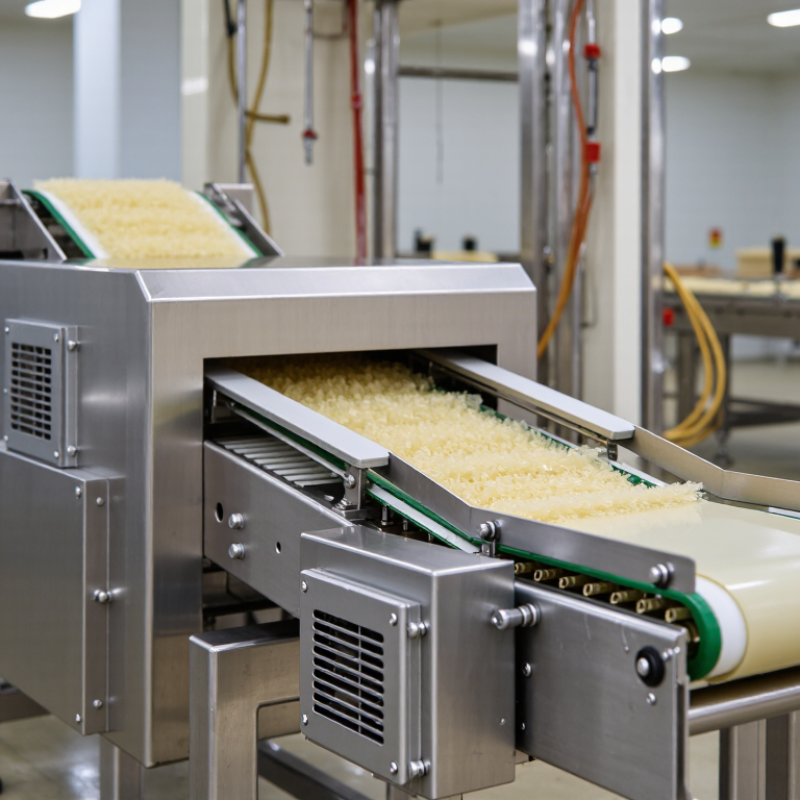
Wax flaking conveyors are judged by stable handling, not belt speed alone. For global buyers, 0.5–5 t/h is a useful screening range. At 0.5 t/h, a compact enclosed belt conveyor may provide gentle, controlled transfer. Around 1–3 t/h, cleated belts and modular belts often offer better feeding stability. At 5 t/h, wider belts, stronger drives, and improved discharge control become important. Actual capacity can drop when flakes contain fines, retain heat, or bridge inside the hopper.
Seven practical configurations deserve comparison: enclosed belt, cleated belt, perforated belt, vibratory conveyor, scraper conveyor, cooling conveyor, and modular belt conveyor. Enclosed designs help reduce dust during long transfers. Perforated belts can support ventilation when warm flakes need additional cooling.
Vibratory conveyors handle short, controlled movements well. Scraper designs may suit heavier loads, but they can create more friction and break fragile flakes. The “best” option changes with wax temperature and flake thickness.
Request test data using your actual wax. Measure bulk density, inlet temperature, flake size, moisture, and transfer height. A conveyor rated at 5 t/h may achieve less in continuous operation. I have seen theoretical capacity reduced by poor feeding and uneven loading. That detail matters. Ask for belt speed, motor power, emergency stops, guarding, cleaning access, and material certificates. Trial runs should last long enough to reveal buildup, slipping, and discharge inconsistency. Some specifications look precise, but field conditions remain imperfect.
Seven Conveyor Designs Compared by Belt Widths from 300–1,200 mm
Wax flaking conveyors vary widely, and belt width strongly affects output, cooling space, and maintenance access. A 300 mm belt suits compact lines and controlled batches. A 450 mm model offers more working room without demanding a large floor area. The 600 mm size is often a practical choice for steady industrial production.
Seven designs cover common processing needs. A narrow perforated belt supports small flakes and faster drainage. A 600 mm stainless-steel belt handles balanced loads and routine washdowns. A 750 mm cooling conveyor gives wax more residence time across a longer surface. An 800 mm scraper-assisted design helps release sticky flakes, although scraper pressure needs careful adjustment. A 900 mm modular belt provides easier section replacement. A 1,000 mm wide conveyor supports high-volume feeding but requires stronger framing. The 1,200 mm design offers maximum loading space, yet it may consume more energy and complicate cleaning.
Tips: Measure the actual flake layer, not only the hourly target. Leave access beside both conveyor edges. Check belt tension after thermal cycling. A wider belt is not always better. In my experience, operators sometimes choose excess width, then struggle with uneven cooling and unused surface area. One overlooked detail is transfer height; a small drop can break fragile flakes or create dust. Confirm food-contact materials, guarding, emergency stops, and cleaning procedures with qualified engineers and local requirements. Prototype testing remains valuable because wax behavior changes with temperature, thickness, and formulation.
7 Best Wax Flaking Conveyors for Global Buyers
Seven conveyor designs compared by nominal belt widths from 300 to 1,200 mm. Wider belts generally provide more conveying surface for higher-volume wax flake handling, while the final selection should also consider material load, conveyor length, incline, and required throughput.
The belt widths shown are commonly used nominal conveyor sizes for industrial material handling. They are reference dimensions rather than brand-specific specifications.
Cooling, Scraping, and Flake Control at 20–40°C Operating Conditions
7 Best Wax Flaking Conveyors for Global Buyers
Cooling, scraping, and flake control matter when wax leaves the flaker at 20–40°C. The best conveyor depends on viscosity, flake thickness, and required throughput. A cooled stainless-steel belt removes surface heat evenly. A scraper conveyor helps prevent soft wax from sticking to contact surfaces. A perforated belt improves airflow beneath warm flakes. These options suit continuous production lines with controlled discharge temperatures.
A vibrating conveyor separates overlapping flakes and reduces clumps before packaging. Its adjustable amplitude protects fragile flakes from excessive breakage. A flighted conveyor provides steady movement on inclined routes, especially when floor space is limited. A modular belt conveyor offers quick cleaning and flexible layouts. An enclosed drag conveyor can limit dust exposure during longer transfers, but it may create more frictional heat.
In practical testing, operators should measure wax temperature at the inlet, middle, and discharge. Infrared readings alone can mislead on glossy surfaces. Use a calibrated contact probe when possible. Scraper pressure needs careful adjustment. Too little pressure leaves residue, while too much pressure damages flakes and increases energy use. I would not select equipment from catalog capacity alone. Real performance changes with ambient humidity, cooling-water temperature, and flake thickness. One overlooked detail is the transfer gap. Large gaps create broken edges and unwanted fines. Short trials with actual wax are often more reliable than assumptions.
 English
  Français