What Is the Best Water Quality Monitor from China?

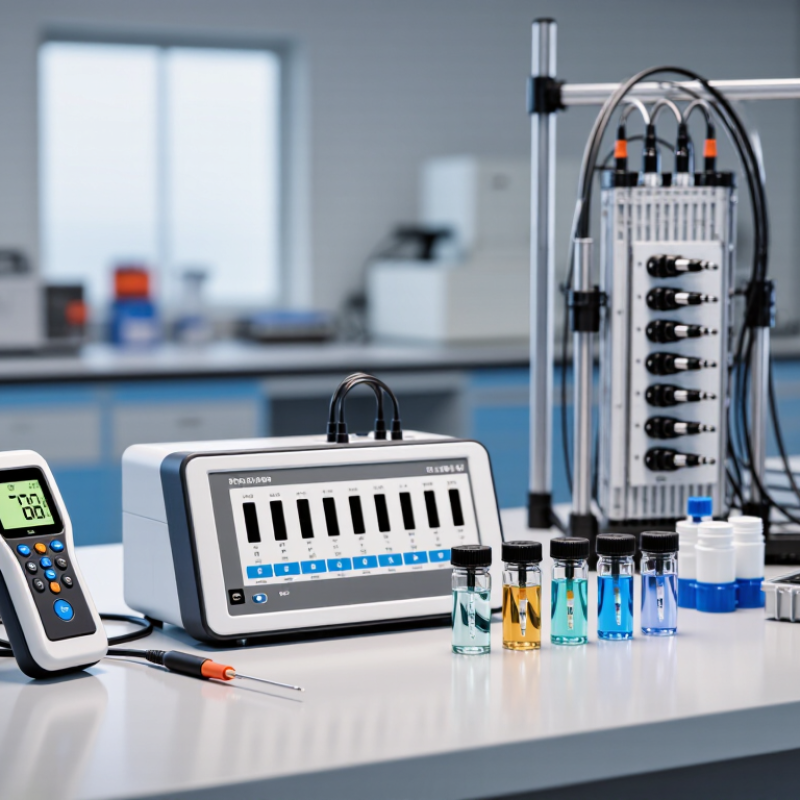
    Choosing the best Water Quality Monitor from China requires more than comparing prices or counting sensor functions. Chinese manufacturers offer portable testers, fixed monitoring stations, and smart systems for aquaculture, laboratories, factories, and household water checks. Each design serves a different purpose.

    A reliable monitor should measure the parameters your application actually needs. Common examples include pH, dissolved oxygen, conductivity, turbidity, temperature, and oxidation-reduction potential. Look for stable readings, replaceable probes, clear calibration instructions, and data records that remain easy to review. A field technician may value a waterproof handheld unit, while a treatment plant may need continuous alerts and remote access. Certification, factory testing, warranty support, and documented accuracy also deserve careful attention. Product pages alone are not enough.

    Real experience often reveals details that specifications miss. Can the probe work in cold water? Does the screen remain readable under strong sunlight? How quickly does calibration drift after repeated use? These questions matter. Very much. Independent testing and customer feedback can strengthen confidence, but neither source is perfect. Even an expensive instrument may produce unreliable results when sensors are dirty or poorly calibrated. That is an uncomfortable limitation. Therefore, the “best” Chinese Water Quality Monitor is not necessarily the newest or cheapest model. It is the one that matches the water conditions, monitoring frequency, technical skill, and verification needs of the user. A careful comparison should balance performance, maintenance, evidence, and long-term service. That balance is easy to overlook.
    What Is the Best Water Quality Monitor from China?

    Types of Water Quality Monitors Made in China

    What Is the Best Water Quality Monitor from China?

    Types of Water Quality Monitors Made in China

    Chinese manufacturers produce several water quality monitor types for farms, laboratories, aquaculture sites, and industrial facilities. Portable handheld meters are useful for checking pH, temperature, dissolved oxygen, conductivity, and salinity beside a pond or pipeline. Their compact cases and replaceable probes support quick field measurements. However, readings can drift when sensors are poorly cleaned.

    Online water quality monitors provide continuous measurements at fixed locations. They can track pH, turbidity, dissolved oxygen, chlorine, ammonia, or electrical conductivity. Many models send data through cellular, Wi-Fi, or wired connections. A clear screen helps operators notice sudden changes, such as cloudy water after heavy rain. Reliable systems still need regular calibration and protected sensor cables.

    Multiparameter sondes combine several probes in one waterproof housing. They suit rivers, reservoirs, aquaculture tanks, and treatment processes. Optical sensors often measure dissolved oxygen with less membrane maintenance. Electrochemical sensors can be practical and affordable, but they may require more frequent servicing. Laboratory photometers offer another option for testing specific chemical indicators with prepared reagents.

    The best choice depends on the testing site, accuracy target, maintenance skills, and data requirements. An inexpensive monitor may become costly if its probes fail quickly. Specifications alone are not enough. Ask for calibration procedures, test records, replacement parts, and technical support. No instrument is perfect. Even experienced users can misread results when temperature compensation or sample handling is overlooked.

    Key Parameters Measured by Chinese Water Quality Monitors

    What Is the Best Water Quality Monitor from China?

    The best Chinese water quality monitor depends on the parameters your site actually requires. In field inspections, pH is usually the first reading because it affects corrosion, treatment efficiency, and aquatic health. Temperature matters too. It changes dissolved oxygen and influences many chemical reactions.

    Turbidity reveals suspended particles, often through a scattered-light sensor. Conductivity estimates dissolved ionic content, while TDS provides a convenient, approximate reading. Dissolved oxygen is essential for aquaculture, rivers, and biological treatment systems. Some advanced monitors also measure oxidation-reduction potential, salinity, ammonia, nitrate, or chlorine. Do not treat every reading as equally reliable. Sensor design and maintenance matter more than a crowded specification sheet.

    A practical monitor should support regular calibration, temperature compensation, data logging, and clear alarm settings. Look for documented accuracy, replaceable probes, waterproof construction, and communication options such as RS485 or wireless transmission. Chinese manufacturers offer many configurations, but technical documents require careful checking. A low price may hide frequent calibration or fragile electrodes. That can become expensive.

    No sensor is perfect. Real water contains biofilm, bubbles, sediment, and changing temperatures. Even a professional monitor can drift without cleaning and reference checks. For regulatory decisions, compare readings with laboratory methods and recognized testing procedures. That extra step may feel slow, yet it protects the data and the people relying on it.

    How to Compare Accuracy, Features, and Certifications

    What Is the Best Water Quality Monitor from China?

    The best monitor depends on the water and the decisions it must support. A device for aquaculture needs dissolved oxygen, temperature, and stable long-term logging. A household tester may only need pH, conductivity, and temperature. Do not confuse resolution with accuracy. A display showing 0.01 pH does not guarantee trustworthy readings. Check stated accuracy, repeatability, measuring range, response time, and sensor drift. My field checks use certified reference solutions at different temperatures, because a clean glass can still produce unstable data.

    Features should solve real problems. Automatic temperature compensation improves pH and conductivity measurements. Replaceable probes reduce maintenance costs over time. Data export, calibration reminders, alarms, and waterproof protection matter during daily use. A TDS value is often calculated from conductivity, not measured directly. That distinction deserves attention. Wireless functions are useful, but poor connectivity can interrupt records in a concrete treatment room or outdoor tank.

    Certifications require careful reading. Request calibration records, test reports, and traceability information from the supplier. ISO/IEC 17025 accreditation applies to laboratory competence, not automatically to every monitor. CE, EMC, RoHS, or IP ratings may support compliance for particular markets, but they do not prove measurement accuracy. Check whether the report matches the exact model and probe. I have seen impressive documents with unclear test conditions. That is a warning, not a minor detail. Ask about software updates, technical support, replacement sensors, and recalibration intervals before comparing prices.

    Best Applications for Different Chinese Monitor Models

    What Is the Best Water Quality Monitor from China?

    The best monitor depends on where and how you measure water. A handheld single-parameter model suits aquaculture ponds, wells, and emergency field checks. It can test pH, temperature, salinity, or dissolved oxygen beside a fish tank. Choose a waterproof housing and a clear screen for outdoor work. Short sampling routines reduce operator mistakes.

    For factories and treatment facilities, an online multiparameter monitor is more practical. It can track pH, conductivity, turbidity, and temperature continuously. Data may transfer through wired networks or cellular connections. Install the sensors near the real water flow, not in a stagnant corner. Regular cleaning matters because algae and sediment can distort readings. This model costs more, but missed changes may cost more.

    Laboratories and universities often need benchtop monitors with stronger resolution and calibration controls. These models work well for repeated samples, research comparisons, and drinking-water verification. Use certified reference solutions and keep a written calibration record. A portable model may look convenient, yet it can be unsuitable for precise laboratory work. No model is perfect. I have seen reliable readings become questionable after a neglected sensor cap. Check local testing requirements before purchase, and compare measured results with an independent laboratory when accuracy affects public decisions.

    What Is the Best Water Quality Monitor from China? - Best Applications for Different Chinese Monitor Models
    Monitor Model Type Primary Parameters Typical Measuring Range Typical Accuracy Best Application Sample and Installation Requirements Main Advantages Important Limitations
    Handheld Multiparameter Monitor pH, oxidation-reduction potential, dissolved oxygen, conductivity, salinity, total dissolved solids and temperature pH: 0–14
    Dissolved oxygen: 0–20 mg/L
    Conductivity: 0–200 mS/cm
    Temperature: approximately −5 to 60°C
    pH: about ±0.01 pH
    Dissolved oxygen: about ±0.2 mg/L
    Conductivity: about ±1% of reading
    Temperature: about ±0.3°C
    Field surveys, aquaculture ponds, rivers, lakes, groundwater and wastewater inspections Requires calibration before use. The probe is immersed directly into a representative sample or water body and should be rinsed between locations. Portable, fast, comparatively affordable and capable of measuring several basic indicators at the same location. Readings can be affected by fouling, bubbles, temperature changes, poor calibration and insufficient stabilization time.
    Portable Turbidity Monitor Turbidity and temperature Commonly 0–1000 NTU
    Some versions use a lower range for drinking-water samples and a higher range for wastewater
    Typically about ±2% of reading or the stated instrument resolution, depending on the range and optical method Drinking-water checks, surface-water monitoring, construction-site runoff and wastewater discharge inspections Uses a clean sample cell or flow-through cup. The sample should be mixed gently, measured promptly and protected from bubbles and fingerprints. Quick response, simple operation and useful for detecting suspended solids or sudden changes in water clarity. Color, air bubbles, settling particles, scratched cells and strong ambient light can cause measurement errors.
    Portable Residual Chlorine Monitor Free chlorine, total chlorine, pH and temperature Free chlorine: commonly 0–20 mg/L
    Some low-range configurations are optimized for approximately 0–5 mg/L
    Typically about ±0.05 mg/L at low concentrations or approximately ±5% of reading, depending on the method Disinfection control in drinking-water plants, pools, food-processing water systems and treated wastewater Requires a fresh sample and correct reagent dosage when using a colorimetric method. Electrode-based versions require membrane or sensor maintenance. Useful for verifying whether disinfectant residual is present and whether dosing is within the operating target. Results may be influenced by sample color, oxidizing chemicals, storage time, pH and incorrect reagent handling.
    Benchtop pH/ORP/ISE Analyzer pH, ORP, ion concentration and temperature; optional ion-selective electrodes for fluoride, nitrate, ammonium or other ions pH: approximately −2 to 20
    ORP: commonly −1999 to +1999 mV
    Ion range: depends on the selected electrode
    pH: up to approximately ±0.002 pH on laboratory-grade configurations
    ORP: commonly about ±0.2 mV
    Ion accuracy depends on calibration and matrix effects
    Laboratories, drinking-water quality control, research, process verification and regulatory testing support Needs stable bench conditions, suitable calibration buffers and clean electrodes. Samples should be at a controlled temperature when high accuracy is required. Higher repeatability and resolution than most handheld instruments; suitable for calibration records and controlled laboratory workflows. Not designed for unattended field deployment. Electrode aging, clogged junctions and unsuitable calibration standards can reduce accuracy.
    Online Multiparameter Water Quality Monitor Usually pH, conductivity, dissolved oxygen, turbidity and temperature; some configurations add ORP, salinity or chlorine pH: 0–14
    Dissolved oxygen: 0–20 mg/L
    Conductivity: up to approximately 200 mS/cm
    Turbidity: commonly 0–1000 NTU
    Typically pH ±0.05, dissolved oxygen ±0.2 mg/L, conductivity about ±1% and turbidity about ±5% of reading, depending on sensors and conditions Continuous monitoring in water-treatment plants, aquaculture systems, industrial processes and environmental stations Requires a bypass line, immersion assembly or flow cell. Stable flow, automatic cleaning and scheduled calibration are important for reliable long-term operation. Provides continuous trends, alarm outputs and data transmission through common industrial communication interfaces. Higher installation and maintenance cost. Biofouling, suspended solids and sensor drift can create false alarms if cleaning is neglected.
    Online Ammonia-Nitrogen Analyzer Ammonia nitrogen, pH and temperature; reagent consumption and measurement status are often recorded Commonly approximately 0.05–100 mg/L as nitrogen, with the usable range depending on the selected method and dilution system Often about ±5% of reading or the method-specific stated accuracy Municipal wastewater treatment, industrial effluent control, aquaculture and biological-nutrient-removal processes Usually requires filtered or conditioned samples, controlled reagent delivery and regular blank or standard checks. Supports continuous process control and can identify ammonia breakthrough earlier than occasional laboratory sampling. Reagents, tubing and pumps require routine replacement. Interfering compounds and poor sample conditioning may affect results.
    Online COD or TOC Analyzer Chemical oxygen demand or total organic carbon, with optional pH, conductivity and flow monitoring COD: commonly configured from approximately 0–5000 mg/L
    TOC: range depends on the analyzer and sample matrix
    Often approximately ±5–10% of reading, depending on concentration, digestion or oxidation method and sample composition Industrial wastewater, municipal influent and effluent, manufacturing discharge and process-load management Needs representative sampling, filtration or dilution where appropriate, controlled reagent handling and periodic comparison with laboratory methods. Offers continuous organic-load information and helps operators track treatment performance between laboratory tests. Higher operating cost and more maintenance than basic pH or turbidity monitoring. Chloride, color, solids and unusual organics can interfere with some methods.
    Portable BOD Respirometric Analyzer Biochemical oxygen demand, dissolved oxygen and temperature Commonly designed for a five-day BOD test, with the measurable range selected according to sample volume, dilution and oxygen capacity Depends strongly on incubation conditions, dilution accuracy, seed quality and dissolved-oxygen measurement performance Wastewater laboratories, treatment-plant performance checks and biodegradable-load studies Requires controlled incubation, suitable dilution water, clean bottles and consistent temperature, commonly around 20°C for standard BOD testing. Can reduce manual dissolved-oxygen readings and improve data logging during the incubation period. It is not an instant monitor. Results require incubation and are sensitive to toxic substances, nitrification and biological sample conditions.
    The best model depends on the monitoring objective: handheld multiparameter instruments suit rapid field screening, benchtop analyzers suit laboratory accuracy, online systems suit continuous control, and dedicated analyzers are preferable when a specific pollutant such as turbidity, residual chlorine, ammonia nitrogen, COD or BOD must be tracked.

    How to Select the Right Water Quality Monitor for Your Needs

    Choosing the best water quality monitor from China starts with your actual testing environment. A device for aquaculture may need different sensors than one used in drinking-water checks. Write down the parameters you need: pH, dissolved oxygen, conductivity, turbidity, temperature, or residual chlorine. Do not pay for sensors you will never use. In field work, I prefer a clear display, replaceable probes, and glove-friendly controls. A bright screen matters beside a muddy pond.

    Check the instrument’s measurement range, accuracy, resolution, and response time. These figures should match recognized testing methods and local regulatory requirements. Ask for calibration instructions, reference solutions, factory records, and a realistic warranty process. A low price is less attractive when one failed probe delays sampling. For online monitoring, examine data logging, alarm settings, export formats, and network stability. Battery life also matters during long inspections. If the monitor connects to a platform, confirm who can access and protect the data.

    Look closely at construction details. An IP-rated housing, sealed ports, and corrosion-resistant materials help in wet workplaces. Still, no housing survives careless cleaning forever. Test the monitor with known solutions before trusting unusual readings. Keep records of calibration dates, sample temperature, and operator actions. I have seen readings change after air bubbles covered a dissolved-oxygen probe. That experience is easy to overlook. A supplier should provide technical support, spare parts, training, and clear documents in usable English. If these details remain vague, the monitor may not suit your needs, even when its specifications look impressive.

    What Is the Best Water Quality Monitor from China?

    How to Select the Right Water Quality Monitor for Your Needs

    The chart compares maximum permitted concentrations for selected chemical indicators in China's drinking-water standard GB 5749-2022. Because the limits span a wide range, the chart uses a logarithmic scale. When selecting a monitor, match its sensor configuration, measurement range, accuracy, calibration support, and data-recording functions to the parameters that matter for your application.

    Reference: Standards for Drinking Water Quality, GB 5749-2022. Values are shown in mg/L; nitrate is expressed as nitrogen.