 English
  Français
2026 Best Custom Plasma Cutting Machines to Buy?
Choosing the right machine in 2026 requires more than comparing cutting speeds or online star ratings. Custom Plasma Cutting systems differ widely in torch control, software compatibility, table design, and after-sales support. A machine that performs well in a metal fabrication shop may be unsuitable for a school, repair garage, or small production line.
This guide examines the best custom plasma cutting machines to buy in 2026 through practical performance criteria. It considers cut thickness, duty cycle, motion accuracy, consumable costs, fume extraction, electrical requirements, and operator training. These details matter. A powerful 105-amp unit may cut thicker steel, but a compact 45-amp machine can deliver better value for signs, brackets, and light fabrication.
Real working conditions often reveal more than product brochures. Watch the torch pierce a six-millimeter steel plate. Check whether the edge remains clean after repeated cuts. Listen for unstable airflow. Small problems become expensive quickly. Software is another concern, especially when drawings move between CAD programs and the cutting table.
There is no universal winner. Not really.
Reliable purchasing decisions should combine manufacturer specifications, verified service information, user feedback, and an honest assessment of production needs. Some advertised tolerances may depend on ideal settings and skilled operators. That point deserves careful reflection. This article compares leading options, highlights their practical strengths and limits, and explains which Custom Plasma Cutting machine may suit different budgets, materials, and workloads. The goal is not to promote the most expensive equipment, but to identify dependable value for real-world metalworking.
What Is a Custom Plasma Cutting Machine?
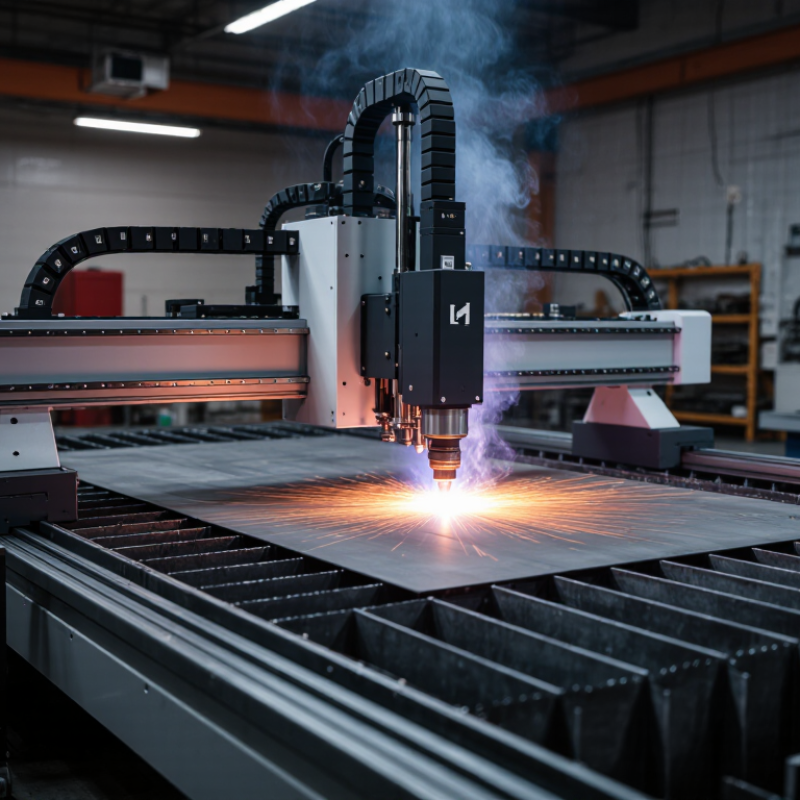
A custom plasma cutting machine is a cutting system configured around a specific workshop, material range, and production routine. Unlike a standard table, it may combine a tailored bed size, torch height control, software, power source, and extraction equipment. The word custom does not simply mean larger. It means selected dimensions and functions solve a measured cutting problem. A small fabrication shop might need a compact 1,500 by 3,000 millimeter bed. A structural workshop may require deeper clearance and stronger slat support. Details matter.
In practical use, I have found that material thickness should guide the design before software features do. Thin sheet needs stable arc control and clean motion. Thicker plate demands adequate amperage, torch travel, and heat management. The machine can also include rotary cutting, bevel capability, automatic nesting, or a water table. Not every option improves results. More complexity can create more maintenance points. That is easy to underestimate. A reliable specification records expected materials, daily cutting hours, tolerances, available floor space, and electrical capacity.
A responsible buyer should request documented performance tests, service procedures, and clear replacement-part information. Ask for sample cuts in the actual metal grades used. Inspect edge squareness, dross, hole quality, and repeatability. Safety design deserves equal attention. Fume extraction, guarding, emergency stops, grounding, and operator training should match local requirements. I would also leave room for human error; rushed setup can ruin an excellent cut. Customization is useful, but only when each feature earns its place in the workflow.
2026 Best Custom Plasma Cutting Machines to Buy? - What Is a Custom Plasma Cutting Machine?
A custom plasma cutting machine is a CNC plasma system configured for a specific material range, workpiece size, cutting speed, automation level, and production requirement. The specifications below represent practical machine configurations commonly available for professional metal fabrication. Actual performance depends on the plasma power source, consumables, material grade, gas pressure, software settings, and operator setup.
| Custom Machine Configuration | Recommended Application | Typical Cutting Area | Recommended Plasma Rating | Effective Mild-Steel Thickness | Maximum Piercing Thickness | Typical Cutting Speed | Key Custom Features | Best Fit |
|---|---|---|---|---|---|---|---|---|
| Compact CNC Plasma Table | Small workshops, repair work, signage, and light fabrication | 1,000 × 1,000 mm to 1,500 × 3,000 mm | 45–65 A | Up to approximately 12 mm | Approximately 16 mm | Up to 6,000 mm/min on thin sheet | Compact footprint, manual torch-height setup, removable water tray or downdraft bed | Occasional and low-volume cutting |
| General-Purpose CNC Plasma Table | Fabrication shops, brackets, frames, agricultural parts, and structural components | 1,500 × 3,000 mm to 2,000 × 4,000 mm | 65–105 A | Up to approximately 20 mm | Approximately 25 mm | Up to 8,000 mm/min on thin sheet | Automatic torch-height control, nesting software, water table, and dual-drive gantry | Most small and medium fabrication businesses |
| High-Definition Plasma System | Precision parts, machinery components, enclosures, and repeat production | 1,500 × 3,000 mm to 2,500 × 6,000 mm | 100–200 A | Up to approximately 30 mm | Approximately 35–40 mm | Up to 10,000 mm/min on thin material | Arc-voltage control, collision sensing, optimized gas control, and precision motion components | Higher accuracy and repeatability |
| Heavy-Duty Plasma Cutting Table | Heavy equipment, structural steel, ship components, and thick plate processing | 2,000 × 4,000 mm to 3,000 × 12,000 mm | 130–300 A | Approximately 40–50 mm | Approximately 50–75 mm | Up to 5,000 mm/min on thin material | Reinforced gantry, heavy slat bed, powered plate loading, and industrial fume extraction | Continuous heavy-plate production |
| Plasma and Oxy-Fuel Combination Table | Mixed-thickness steel processing and large structural parts | 2,000 × 6,000 mm to 3,000 × 12,000 mm | 105–300 A plasma plus oxy-fuel torch | Approximately 40–50 mm with plasma | More than 100 mm with suitable oxy-fuel equipment | Process-dependent; generally slower on thick plate | Automatic torch selection, multiple cutting heads, gas safety controls, and zone-based extraction | Shops cutting both medium and very thick steel |
| Tube and Pipe Plasma System | Round tube, square tube, pipe fittings, frames, and intersecting joints | Flat table plus rotary axis up to approximately 6,000 mm long | 65–130 A | Approximately 20–30 mm, depending on profile geometry | Approximately 35 mm | Up to 5,000 mm/min on thin-wall tube | Rotary chuck, automatic diameter sensing, bevel-capable torch, and tube nesting software | Frame, railing, furniture, and tube fabrication |
| Bevel-Cutting Plasma System | Weld-preparation edges, structural joints, and pressure-related fabrication | 1,500 × 3,000 mm to 2,500 × 8,000 mm | 105–200 A | Approximately 25–35 mm | Approximately 40 mm | Lower than straight cutting because of torch angle and edge geometry | Multi-axis bevel head, automatic angle compensation, seam tracking, and weld-preparation software | Projects requiring ready-to-weld edges |
Note: Cutting capacities and speeds are typical indicative ranges for mild steel. Stainless steel and aluminum may require different amperage, gas combinations, pierce settings, and operating speeds.
Related Posts
-
Why Choose Custom Plasma Cutting for Global Buyers?
-

Plasma Cutting Table Market Trends and Insights for Global Buyers 2025
-

How to Optimize Your Plasma Cutting Machine for Maximum Efficiency and Precision
-
Envisioning the Future of Compact CNC Plasma Cutting Technology for Global Buyers
-

Ultimate Checklist for Choosing the Perfect Industrial Plasma Cutter for Your Business Needs
-
Revolutionizing Global Manufacturing with the Best CNC Plasma Cutting Machine from China